

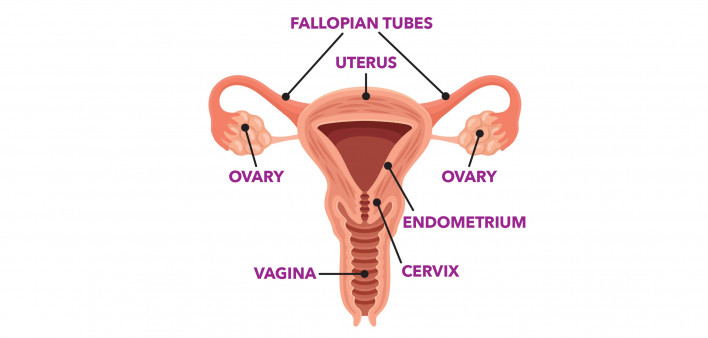
Gynecologic cancers are malignancies that affect the female reproductive system.
Three main types of cancer originate in the uterus, or womb. The most common, endometrial cancer, starts in the endometrium, the inner lining of the uterus that thickens, breaks down and sheds as part of the menstrual cycle. Uterine sarcoma, which begins in the muscular wall of the organ or supporting tissues, is rare. Cervical cancer starts in the cervix, the lower part of the uterus leading to the vagina. Ovarian cancer arises in the ovaries, which produce eggs; cancer may also start in the Fallopian tubes, which carry eggs to the uterus.
Endometrial and ovarian cancer usually occur after menopause. Greater exposure to estrogen—for example, due to early menstruation, late menopause, having few or no pregnancies, obesity or use of estrogen-only hormone replacement therapy—is associated with higher risk for both malignancies. The causes of uterine sarcoma are not well understood, but genetic factors and radiation for other cancers raise the risk. Women with inherited BRCA gene mutations are more prone to ovarian cancer as well as breast cancer.
Endometrial cancer typically causes symptoms, such as unusual vaginal bleeding, so it is often found at an early stage, when it can more easily be treated or even cured. Uterine sarcoma is harder to detect, more aggressive and harder to treat. Ovarian cancer can cause symptoms, such as abdominal pain and bloating, but it is usually asymptomatic at early stages, meaning it is often diagnosed late and difficult to treat. There are no routine screening tests for endometrial cancer, uterine sarcoma or ovarian cancer.
Although it also originates in part of the uterus, cervical cancer is a different type of malignancy altogether. It is usually caused by human papillomavirus (HPV), a sexually transmitted infection that can also cause cancers of the vagina, vulva (external female genitalia) and anus. The virus triggers abnormal precancerous cell growth (known as dysplasia, intraepithelial neoplasia or squamous intraepithelial lesions), which can progress to invasive cancer. Most people with HPV infection don’t develop cancer, but progression is more likely in those with compromised immunity (for example, due to untreated HIV).
Regular cervical cancer screening with HPV tests and Pap smears is recommended for women ages 21 to 65. Precancerous cell changes can be managed to prevent disease progression, but once invasive cancer develops, it’s more difficult to treat. Fortunately, an effective vaccine (Gardasil 9) can prevent HPV infection and its complications.
Treatment for gynecologic cancers may involve surgery, radiation, endocrine therapy (hormone-blocking medications), traditional chemotherapy and newer targeted therapies, antibody-drug conjugates and immunotherapies. In many cases, combination therapy produces the best response, but this can also lead to more side effects. In younger women, surgery, radiation and certain medications can cause temporary or permanent infertility, but fertility preservation (for example, egg freezing) may be possible.
A gynecologic oncologist can explain available approaches based on your specific type of cancer, how advanced it is and your overall health. Treatment has improved over the years, and new medications are always being tested. Ask your doctor if a clinical trial might be an option.




Comments
Comments