
What is leukemia?
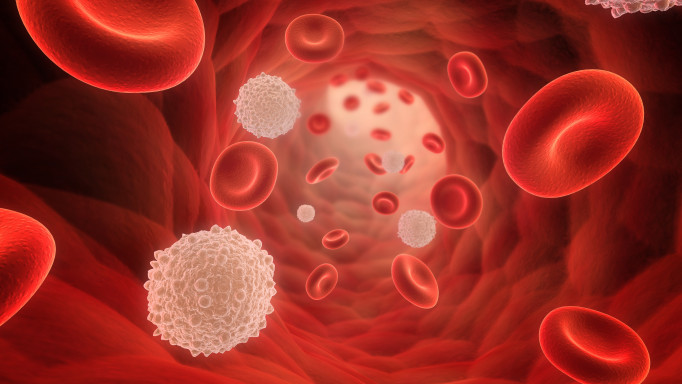
Leukemia refers to a group of cancers that affect blood-forming stem cells or immature blood cells, primarily white blood cells that carry out immune responses. Abnormal cells can grow out of control in the bone marrow and enter the bloodstream before they are fully developed, crowding out mature blood cells. The resulting shortage of functional cells can lead to increased susceptibility to infections, anemia and impaired blood clotting.
Leukemia typically arises due to genetic changes, and it can often be treated with targeted therapies specific to these mutations. A “watchful waiting” strategy may be indicated for chronic leukemia, but acute leukemia requires prompt treatment. Leukemia can often be put into remission with medications—which can last for years or even a lifetime—but it is generally not considered cured because relapse can occur.
How is leukemia classified?
Leukemia is classified according to the type of cells affected, whether it is acute (fast-progressing) or chronic (slow-growing) and whether it affects adults or children. Acute anemia involves overgrowth of immature blood cell precursors, known as blasts, that cannot carry out normal functions. Chronic leukemia involves overproduction of more mature but abnormal blood cells that are only partially functional. There are four major types of leukemia:
- Acute lymphocytic or lymphoblastic leukemia (ALL)
- Chronic lymphocytic leukemia (CLL)
- Acute myeloid or myeloblastic leukemia (AML)
- Chronic myeloid or myelogenous leukemia (CML)
Acute lymphocytic leukemia involves overgrowth of precursors known as lymphoblasts in the bone marrow, which give rise to lymphocytes (B cells, T cell and natural killer cells). Chronic lymphocytic leukemia usually involves overproduction of abnormal B cells (which produce antibodies), but rare forms affect T cells. CLL is similar to small lymphocytic lymphoma (SLL), but abnormal B cells are more likely to be found in the bloodstream in those with CLL versus in the lymph nodes in people with SLL. Hairy cell leukemia is a rare type of lymphocytic leukemia characterized by overgrowth of B cells with a “hairy” appearance.
Acute myeloid leukemia usually involves overgrowth of precursors known as myeloblasts, which give rise to granulocyte immune cells (neutrophils, basophils and eosinophils). Chronic myeloid leukemia typically develops slowly. Other myeloid leukemia subtypes affect precursor cells that give rise to red blood cells or platelets. Myelodysplastic syndromes (MDS) occur when abnormal stem cells in the bone marrow produce too few functional white blood cells, red blood cells and/or platelets. MDS can sometimes progress to AML.
What are the risk factors for leukemia?
Overall, leukemia is more common among people over age 60 and among men compared with women. AML and CLL are the most common types of leukemia in adults. ALL, however, more often affects children and teens. In fact, acute leukemia accounts for nearly a third of childhood cancers. Chronic leukemia is rare in children.
Risk factors for leukemia include certain genetic disorders or gene mutations, family history, smoking and exposure to radiation or environmental chemicals. People treated with radiation or chemotherapy for other types of cancers are at higher risk for developing leukemia.
What are the signs and symptoms of leukemia?
People with leukemia often have few or no symptoms during its early stages. Chronic leukemia may remain asymptomatic for years, while acute leukemia can progress rapidly. At later stages, the uncontrolled growth of immature or abnormal blood cells can crowd out normal white blood cells that fight infections, red blood cells that carry oxygen and platelets that enable blood to clot. Signs and symptoms of leukemia may include:
- Increased white blood cell count
- Fever or chills, night sweats
- Frequent infections
- Anemia (red blood cell deficiency)
- Fatigue or weakness
- Shortness of breath
- Easy bruising or bleeding
- Small red spots under the skin (petechiae)
- Loss of appetite or unintentional weight loss
- Swollen lymph nodes
- Enlarged liver or spleen
- Bone or joint pain.
How is leukemia diagnosed?
A blood test known as a complete blood count takes an inventory of the different types of blood cells. Leukemia may be suspected when this test shows an abnormally high white blood cell count. An enzyme called lactate dehydrogenase is often elevated in people with leukemia. A bone marrow sample (biopsy) may be collected to examine in a lab. Leukemia cells look abnormal under a microscope and may have mutations that can be detected with genomic tests. For example, most people with CML have a mutation known as a Philadelphia chromosome.
Once cancer is diagnosed, various imaging scans, a spinal tap or other tests may be done to see how much it has spread. Leukemia staging differs for the various subtypes but typically involves factors including lymphocyte count; lymph node, liver or spleen enlargement; and depletion of red blood cells and platelets.
How is leukemia treated?
Treatment for leukemia varies according to the type, whether it is acute or chronic, the stage of disease and the patient’s age, overall health and prior treatment history. Treatment for chronic leukemia can often be delayed, but fast-growing acute leukemia should be treated as soon as possible. In many cases, different types of treatment are used in combination. Treatment may include an induction phase to put the cancer into remission followed by a consolidation or maintenance phase to prevent relapse. Some people respond very well to treatment and remain cancer-free for years, but others do not respond as well or experience recurrence. Leukemia that does not respond to initial therapy (known as refractory) or relapses is harder to treat.
Watchful waiting: Treatment for asymptomatic chronic leukemia may be delayed while a patient is monitored for signs of disease progression, known as active surveillance.
Radiation: Radiation may be used to reduce the number of abnormal blood cells. It is often used in conjunction with other forms of treatment.
Spleen removal: The spleen, which removes old blood cells from circulation, may be removed if it becomes enlarged.
Chemotherapy: Traditional chemotherapy works by killing fast-growing cancer cells. However, it can also destroy healthy cells, leading to side effects such as nausea, hair loss and peripheral neuropathy. Chemotherapy for leukemia generally involves a combination of drugs.
Targeted therapy: Targeted drugs work against cancers with specific characteristics. For example, they may target specific genetic mutations or interfere with signaling pathways that regulate cell growth. Several tyrosine kinase inhibitors are used to treat leukemia.
Immunotherapy: This type of treatment helps the immune system fight cancer. Immune checkpoint inhibitors, which restore T cells’ ability to recognize and destroy cancer cells, are largely ineffective against leukemia, but new approaches are under study.
CAR-T therapy: Chimeric antigen receptor T-cell therapy involves removing a sample of a patient’s T cells, reprogramming them in a lab them to attack their cancer and infusing them back into the body.
Stem cell transplant: Bone marrow contains stem cells that give rise to all types of blood cells. A patient’s cancerous blood cells are destroyed with chemotherapy and sometimes radiation and replaced with either stored stem cells from the same individual (autologous transplant) or new cells from a matched donor (allogeneic transplant).
Leukemia treatment has improved dramatically in recent decades. The first targeted therapy that blocks a protein that drives cancer growth, Gleevec (imatinib), was approved in 2001 for Philadelphia chromosome-positive CML, and the first CAR-T therapy, Kymriah (tisagenlecleucel), was approved in 2017 for children and young adults with ALL. Building on this momentum, many clinical trials are now underway to test new experimental therapies for different types of leukemia.
For more information about leukemia, see the following resources:
American Cancer Society: Leukemia
American Cancer Society: Leukemia in Children
Last Reviewed: October 26, 2025