

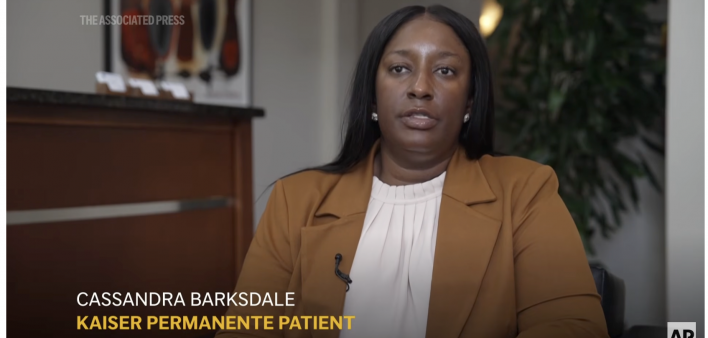
Cassandra Barksdale is suing healthcare provider Kaiser Permanente following an alleged biopsy mix-up that led to a mistake endometrial cancer diagnosis and an unnecessary hysterectomy, reports The Associated Press (AP).
According to the lawsuit, another patient’s tissue sample was mistakenly labeled as that of Barksdale, who underwent a hysterectomy on May 15, 2025. In September, while waiting for instructions regarding follow-up chemotherapy, Barksdale was told that a DNA analysis found that the aggressive endometrial uterine cancer diagnosis belonged to a different patient.
“She came into Kaiser Permanente looking for answers, and she left with a diagnosis that did not belong to her. And every step that was taken after that was based off of misinformation,” her attorney, Shannan Young, told the AP.
Barksdale sought medical treatment for heavy bleeding and fibroids, or noncancerous growths in and around the uterus, at Kaiser Permanente Southwood Medical Center in Jonesboro, Georgia, in early 2025. Days later, she underwent a biopsy on March 15 and a full hysterectomy.
Representatives for Kaiser Permanente released a statement that read in part:
Ms. Barksdale should not have experienced this.
We have highly trained staff and very thorough processes in place to prevent errors like this from taking place. After this occurred last year, we took immediate steps to ensure it could not happen again. We realize the impact of this incident and are committed to working with Ms. Barksdale and her counsel to resolve this in the most fair and accountable way we can.
How often do such mix-ups occur? Unfortunately, there are no comprehensive data showing how often pathology labs make such mistakes, but certain studies and clinical trials shed some light on the rarity of these errors.
In 2011, a large clinical trial found that two men who were diagnosed with prostate cancer and had their prostates removed over the course of two years did not have the disease at all. A third mix-up was caught before any medical intervention took place. Further DNA analysis of over 10,000 biopsies showed that 27 had been mislabeled. Among 6,733 blood samples, 31, or 0.5% had been switched.
Since 2011, labs have implemented barcode systems for specimen labeling and DNA matching. A 2018 analysis by the Centers for Medicare & Medicaid Services found that 364 out of 9,655, or 3.8%, of labs were deficient of at least one of the regulations relevant to specimen source errors in the United States.
Rare as they are, mix-ups can cause real harm. Barksdale lived for months of 2025 thinking she had an aggressive type of cancer, which directly harmed her and her family’s well-being. At one point, she even started making funeral plans.
“There’s no amount of money that’s going to return back to her, her healthy organs or erase the experiences and the pain that she’s had. But our justice system recognizes that when somebody’s negligence harms another person, accountability requires more than ‘I’m sorry,’” Young said.



Comments
Comments