

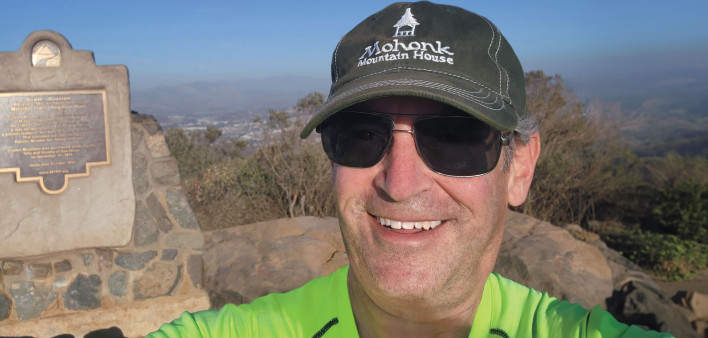
2015
I am a physician with expertise in internal medicine, geriatrics and palliative care. My wife and I live in Minneapolis, and we have two daughters, now grown, and two grandchildren. I have generally been healthy, but one morning in January, I woke up with a fast heartbeat, so I saw my primary doctor, who found there was no cardiac problem. But my blood smear showed smudge cells, a hallmark of chronic lymphocytic leukemia—CLL. Like most people diagnosed with CLL, I had no symptoms to suggest cancer. Despite quickly catching up on the medical facts about CLL, I was very upset.
I found an oncologist at the Mayo Clinic [in Rochester, Minnesota] who specializes in CLL. Initial blood tests suggested a less than 20% chance that I would need treatment in the next five years and maybe never. Despite that, I had a lot of anxiety. I knew I wouldn’t die of this immediately, but I thought now I knew what I would die of. I told only two people—my wife and a friend. I didn’t tell my nearly adult children, my siblings or my mother. I knew my siblings would want to tell my mother, and I didn’t want to trouble her. Sharing a CLL diagnosis can lead to uncomfortable advice and questions, especially about delaying treatment. I did seek support from a psychotherapist who, over a few sessions, helped me process my feelings.
At the time, the only nonexperimental initial treatment for CLL was a challenging chemotherapy-based regimen, but new drugs were on the horizon. To physically prepare for eventual treatment, I took up jogging, although I never enjoyed it.
2016
I got on the mailing list of the CLL Society, a patient advocacy and education organization founded by a doctor with CLL, Brian Koffman. In February, I had some enlarged lymph nodes and in August, a mildly low platelet count. Neither was significant, but if anything goes awry, you worry whether it’s related to the CLL.
2017–2018
The CLL Society solicited facilitators, so I volunteered to start a support group in Minneapolis in November 2017. Just meeting people who’d had CLL longer than me and were doing well was the most reassuring thing. You can look at statistics, but putting a face on it is much more helpful.
2019–2020
I’ve had heartburn, and I was diagnosed with Barrett’s esophagus, which is precancerous. So I take a heartburn medicine to keep stomach acid from irritating the lining of the esophagus, which reduces my risk. In the big picture of health, this is background noise. Due to COVID-19, our local monthly support group moved online, opening it up to people from around the state and beyond.
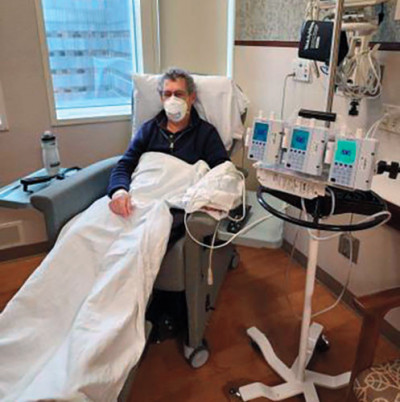
Ed RatnerCoutesy of Ed Ratner
2021
Dr. Koffman told me that physicians with CLL were contacting him from around the world. I volunteered to facilitate a new international monthly Zoom support group just for physicians. We talk more about the latest science than our problems and feelings.
I finally explained my diagnosis to my daughters, both of whom were working in health care in Chicago. They moved back to Minnesota (initially into our basement), along with our son-in-law and their dog and our grandson. I don’t think their move was related to my health, but it has worked out great for all of us.
In July, I had enlarged lymph nodes in my neck and groin. My absolute lymphocyte count, a measure of disease progression, was rising. It had been around 15 and now was 60. I discussed treatment options with my doctor.
February 2022
My oncologist ordered new tests to understand the genetics of my CLL—an important motto in the CLL Society is “Test before you treat.” Several new drugs had been approved, targeted specifically to lymphocytes affected by CLL. I no longer needed to fear the risks of chemotherapy.
May 2022
Abdominal pain at night was waking me up. There was no certainty that the pain was related to CLL, but my spleen was enlarged, which was a reason to plan for treatment. I got a second opinion from another CLL specialist, talked to people in my support group and did more reading. The physician’s recommendation was a starting point, but I needed to consider options, risks, where to get treatment and when.
There were two approved approaches. One is a pill that you take indefinitely [a BTK inhibitor, which is a type of targeted therapy]. The other is a more intensive combination of IV treatments every few weeks for six months [a monoclonal antibody immunotherapy] plus pills for a year [another targeted therapy; this one blocks the BCL-2 protein]. They’re both highly effective, with a similar likelihood of the CLL returning over the next five years.
August 2022
I decided on the one-year option, starting in November. I finally felt comfortable sharing my diagnosis. My mother had died, so I wasn’t worried about her worry. Plus, I wanted more emotional support. I needed to explain full-day or overnight trips to the Mayo Clinic so I told my boss and select coworkers. I started writing about my experience on the CLL Society website.
October–November 2022
In late October, I visited with an oncology pharmacist, nurse and doctor. Each one educated me. In early November, I started IV treatment but had side effects, which aren’t unusual. That led to my first hospitalization since birth, to administer the second dose and monitor for another day.
I had a few weekly infusions, then monthly. After the third week, I started the pills. I was working part-time at this point, and I felt well enough to continue, mostly working remotely.
December 2022
I developed a bothersome cough, a possible side effect. I put up with it and figured it would stop when I stopped treatment. I didn’t do any vacation travel that winter and continued to increase my pill dosages per the protocol.
February 2023
My white blood count fell very low. We decided to hold off on the oral medication for a few weeks and start again at a lower dosage. We also hoped it would help with the cough. Research has shown little risk in holding off treatment for a few weeks or in taking less than the full dose, if necessary.
March 2023
I developed a norovirus infection, which caused diarrhea. If I wasn’t being treated for cancer, I might not have even called my doctor, but I went to urgent care and followed up with specialists, out of fear that the diarrhea would become long-lasting and disabling. Fortunately, I recovered within a few weeks.
December 2023
I completed treatment. My cough wasn’t as bad but persisted. Rather than a big celebration, I chose to enjoy every day in better health.
March 2024
Given my employment with the Veterans Administration and a higher rate of CLL among veterans, I advocated for a CLL Society support group for veterans. I co-facilitate it with a veteran who has CLL. Now I’m facilitating three groups a month.
April 2024
I finally went to a pulmonologist for my cough. He diagnosed me with asthma and prescribed an inhaler. It works pretty well. It’s a good lesson—significant new symptoms while being treated for cancer deserve a workup and possible treatment. Go see the right specialist!
My message to anyone diagnosed with CLL? This is very unlikely to kill you. We have enough treatments now that it’s manageable, like many chronic diseases. But it’s a complex disease, and there’s isn’t a quick, simple or inexpensive fix. The immune system affects so much in your body that there are a lot of potential complications. So CLL becomes integrated into many aspects of your life. You should seek the support of professionals, family, friends, support groups.
June—November 2024
Life goes on. But then in June, my wife got sick, and we spent the last six months dealing with her illness. She was my caregiver, going with me to nearly all my appointments, providing empathy and emotional support. Now I was her caregiver. I’ve been through illness on three sides—as a doctor, as a patient and as a caregiver. Now she’s finished with treatment.
December 2024— January 2025
I’m great; my wife is great—it’s like a reset button. We had a big trip to the Alps planned for last September that we had to cancel, but we’ve rebooked it for April. It’s something to look forward to. We’re both healthy again. It’s like starting over.



Comments
Comments