

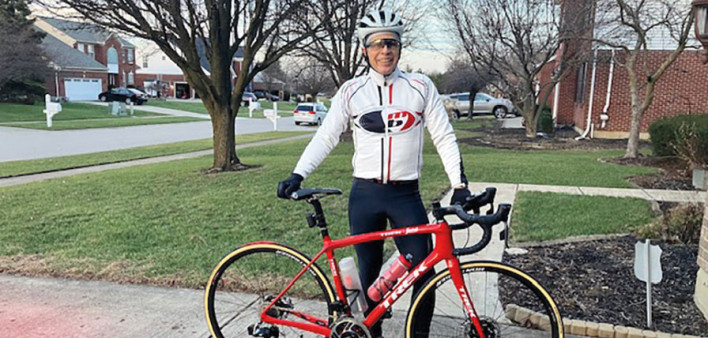
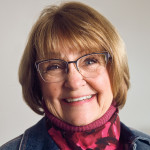
Sports have always been central to my life. I run, bike and swim, have run marathons and done 100-mile bike rides and teach the business side of sports as a professor at the University of Dayton in Ohio. My wife, Deb, and I live in Mason, Ohio, and between us have four adult children.
December 2018
I was scheduled for an operation on my right hand for Dupuytren’s contracture [a thickening of tissues in the palms which causes the hands to curl]. Routine preoperative blood work [showed that] my white blood cells were high. My GP sent me to a hematologist/oncologist, who diagnosed me with chronic lymphocytic leukemia—CLL.
The doctor told me I had cancer but that it was the “good kind”: slow growing. He thought it was reassuring, but telling someone that they have cancer is never good. The hardest part was telling my wife—we’d been married for 10 years at this point—and my children.
January 2019
I was at zero level [or Stage 0, an elevated white blood cell count but no symptoms]. The advice was not to treat but to test my blood every three months. Watch and wait. It’s counterintuitive. But 30% of people with CLL never need treatment. Plus, there are currently over 1,000 studies and clinical trials going on about CLL, so the longer you can wait, the more options you’ll have.
I started training for my summer bike ride, a charity bike ride I created from downtown Cincinnati to Montgomery, Alabama. I wasn’t going to put my life on hold, right?
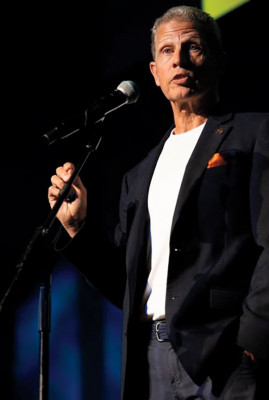
Peter TitlebaumCourtesy of Peter Titlebaum
February–March 2020
My white blood cell count nearly doubled to 75,000 (normal is below 10,000). My hematologist referred me to a CLL specialist at Ohio State University.
I had written an article for the CLL Society, and Laura Alexoff, the facilitator of the Cincinnati chapter, asked if I would join a patient support group. Perhaps these people had some helpful experiences to share, I thought, and if one person can benefit from my participation, that’s gold. When I was a child, my mom and sister Joni shared a secret—asking for help is a strength, not a weakness. By asking for help, you enable someone else to give. Thus, the gift enriches both parties.
April 2020
Dr. Kerry Rogers at Ohio State University gave me a second opinion. I was still at 75,000—Stage I. I also connected with Dr. Emily Curran at the University of Cincinnati, who sent my test results to MD Anderson Cancer Center in Houston. Everyone recommended to continue watch and wait.
May 2020
Looking for my next adventure before my summer class started, I got a job as an Amazon driver during COVID. I learned, even at 60, that I could still pivot. I’m still watching and waiting, but don’t kid yourself: Every time I get my blood checked, I mentally prepare myself for if and when I need some type of treatment. Exercise helps me maintain equilibrium.
June–September 2021
My white blood cell count jumped from 179,000 to 398,000. My liver was distended. It was time for treatment. My choice was either to take a single medication for the rest of my life (or until it failed)—or to undergo a year of aggressive therapy that included two drugs: an oral drug [a monoclonal antibody] and an immunotherapy given by IV. The expectation was that I would be in remission within a year. However, we wouldn’t know how long remission would last. I bet on my ability to tolerate a year of treatment. I started on my late father’s birthday, September 23. That must be a good sign, right?
Next, I needed to tell my friends and family. I am a private person, but it’s important for me to be honest and vulnerable because people care about me: my family, coworkers, even my students. My wife would need people who could support her. Cancer is never just about the patient.
September 2021
I started treatment. Before the fun, you have blood drawn and an IV inserted. Then you take acetaminophen, and after an hour, they start the infusion. I always brought snacks and water. Plus, something to read or watch and a sweatshirt. (You get cold.)
My doctor was concerned that I might develop tumor lysis syndrome, when a large number of cancer cells die within a short period of time, releasing their contents into the blood. Unfortunately, this did happen. I spent two fun-filled nights in the hospital. To pass the time, I walked the halls. Over the course of treatment, I experienced some diarrhea and weight loss. My workout routine adjusted. After three weeks, my white blood cell count dropped to 5,500—within normal range.
Every time I went for my infusion, I brought in goodies for the nurses—brownies, cookies, buckeyes, even hot cocoa bombs. The nurses are heroes, and they are overworked or get worn down by people with negative attitudes. My positivity would rub off on the nurses.
January 2022
I hit a speed bump—I contracted COVID-19. Both CLL and its treatments can suppress immunity. My case was bad enough that I had to go to the emergency room. It was scary, as I was really out of it.
February 2022
February 24 was the last day of treatment. After five cycles of combination treatment, I moved on to the maintenance stage.
March 2022
Barely a month after my treatments ended, during my week off for spring break, I spiked a fever of 102 and had chronic neck pain. At the emergency room, they figured I had viral meningitis. By the end of the week, I wasn’t running a fever, so I went home. But then I got spikes from 99 to 102 two or three times a day. Weeks went by.
I saw an infectious disease expert. On a PET scan, my lungs lit up. I saw a pulmonologist, who took a biopsy. Ten days later, an answer: cryptogenic organizing pneumonia, a reaction to one of the medications I had taken. I started on corticosteroid therapy, finally resolving my fever and providing some normalcy.
Since then, I’ve continued managing my CLL. While my journey hasn’t been the easiest, I know I was born to face challenges like this. I didn’t ring the bell, but my wife and I celebrated by going out to dinner with friends. We do something special every year on that date now. It’s also, of course, my father’s birthday.
July 2025
There are many people, like Liza Avruch, program director at the CLL Society, who have been a great resource. So has my monthly CLL group. I had the chance to bring a former professor, now 76, who’s still on watch and wait, to my class to give a lesson on mindfulness. A 52-year-old athlete from Scotland reached out—he’s starting the same treatment I did. It’s absolutely invaluable to have somebody who’s going through the same treatment. It’s something we can do for each other.
My advice for someone who’s newly diagnosed? You have every right to be upset. Everyone processes this at their own rate. But then there’s acceptance. You need a plan, a strategy for what you can do and control. Information is power, and community a salvation.
I choose to look at the glass as half full. I’m still biking, swimming and eating a good diet most of the time. I’ve been in full remission for three years now. I’m always going to bet on me.
1 Comment
1 Comment