

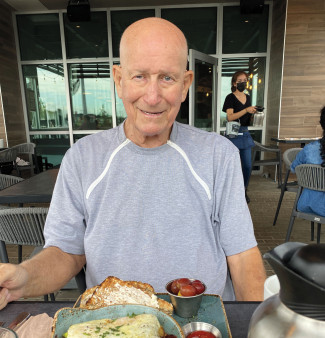
It’s hard to pick one pivotal moment in the four and a half years since extensive stage small-cell lung cancer (SCLC) became an integral part of our lives. Was it when the emergency room doctor shut the door and sat down to tell my husband, Ray, and me what he suspected? The day the biopsy confirmed SCLC with a three- to five-year survival rate? Or was it the months after full-brain radiation in year 3 that changed my husband’s personality, drive, strength and stamina?
For me, the critical point came in month 4. That’s when Ray’s blood sugar was over 500 and, after a series of endocrinology visits and trial and error with oral medication and insulin pens, he received a new diagnosis: type 1 diabetes, requiring an insulin pump.
None of the research I had done on SCLC ever mentioned the possibility that the chemotherapy, radiation or immunotherapy entering my husband’s body could cause this particular health challenge. No oncologist had shared the chance of this happening until the diagnosis, when we were informed that many cancer patients experience this added complication.

Cyndi MacKenzieCourtesy of Cyndi Mackenzie
Ray, a 6-foot-1-inch man weighing 215 pounds, had always loved food. He cooked 95% of our meals, and he preferred his own cooking to that of any restaurant we ever visited. For many months after the brain tumor treatment, he had no sense of smell or taste, which caused considerable weight loss, lethargy and low energy. The protein drinks and suggested diet changes have not helped, and today, at 81, he is at a consistent weight of 150 pounds. Having diabetes has added to this difficulty.
His late wife had diabetes, so Ray was familiar with the challenges and routine of insulin. I am a caregiver who quickly picked up the operation of the pump and the sensor and who understood the contributing factors that cause his blood sugar to be out of range. However, I cannot even guess the number of hours we have spent on this secondary diagnosis or the changes in our lifestyle that occur daily because of our exhaustion, the interruptions of sleep and schedules and the fact that my son’s dog shakes and hides whenever she hears the pump alarm.
Perhaps I should let go of the shock I still feel that cancer caused diabetes and that no one warned us. An official heads up would not have changed a thing. This I realize, but in preparing myself for all that the life-limiting diagnosis of SCLC would bring to our lives, diabetes has been the snag that has most reduced our daily quality of life.
I’m thankful that Ray is 4.5 years into his life expectancy of 5, and I remain grateful to the many oncologists, nurse practitioners and nurses we have encountered on our journey. Heck, even the endocrinologists have been great. Cancer sucks, but so does diabetes!
Cyndi MacKenzie is a grant-professional-certified freelance writer, a bladder cancer survivor, mother and caretaker to her husband, Ray. They reside in Lewiston, Maine, where Ray receives immunotherapy for small-cell lung cancer every four weeks.




Comments
Comments