

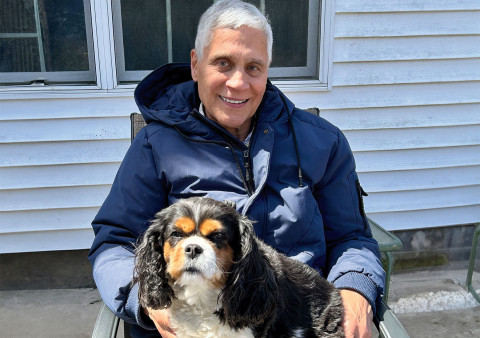
Men don’t talk about their feelings—or their cancer diagnoses. That’s the stereotype. John Antonucci, 76, a married retired doctor from Connecticut, is an exception. And he’s helping other men open up as well. After his own experiences with metastatic prostate cancer, Antonucci began leading virtual support groups through AnCan, formerly known as Answer Cancer.
We spoke with Antonucci for the latest installment of our Can Heal column—that empowering phrase is right there in our title, Cancer Health. The column discusses the myriad nonmedical strategies and insights that help many folks with cancer. Our interview has been edited for length and clarity.
Can you summarize your cancer situation from diagnosis to today?
I had a precancerous condition in my prostate, so I was being monitored twice a year, and my PSA [prostate-specific antigen] climbed in 2019 and 2020 to an abnormal level. A biopsy in early 2020 confirmed high-risk metastatic prostate cancer, which led to a radical prostatectomy. The surgical pathology was very high-risk metastatic prostate cancer. The surgery failed to cure the cancer, and doublet anti-androgen therapy, plus radiation therapy, followed. Two years later, my treatments were stopped due to non-detectable blood tests for PSA. I have been in remission since, albeit with adverse effects from both the surgery and anti-hormone treatments. I’m followed with quarterly blood tests.
How did you become involved in AnCan?
I think I was about six months into all this when I tried an AnCan group. Once I settled down emotionally, I started helping out with science questions and a year later began leading groups. Leading the “feelings” group and writing invitations for it helps me with my own coping and acceptance, both by being among other men with life-threatening illnesses and by helping others.
In a post online, you explore the topic of grief in the context of male cancer care. Can you elaborate on this and how you deal with the grief?
The post you mention was from an invitation to our group Men Speaking Freely. Grief and loss come up in every group, because the losses from cancer keep coming. To name a few: There is the loss of the illusion of immortality, the loss of safety and security, the loss of being in control or being able to fix anything, the loss of sexuality, the loss of strength, of independence, of being pain-free, of looking good and of vitality.
How we cancer survivors deal with it is, firstly, together—with my wife, with other people with cancer and with my groups. People with cancer understand each other. Comradeship can help so much with grief. Within the support group, we listen and talk each other through loss, anger, despair and acceptance. We watch out for depression and encourage each other to get professional help when it appears. Knowledge seems to help with grief, so we stay educated and educate each other.
The AnCan group discusses spiritual support, men’s gender-role conflict, fear of dying, music, awe, gratitude, men’s issues, transformation, suicide, self-image and many other topics.
During your cancer experience, what helped you stay healthy, aside from treatments and medications?
Some lifestyle patterns are associated with longer survival. Exercise may be the most important thing we can do after treatment. It is difficult to exercise when you are fatigued and anemic and your muscles have atrophied, but I try my best to do so.
Fortunately, I don’t smoke or drink. If you do, do what you can to quit.
Moving away from animal products and processed foods in the diet is a lifestyle habit that I believe increases my chances of staying in remission. I like the AntiCancerLifestyle.org site for this kind of information.
Religious practice has been an active point of discussion in our group. Beliefs in the afterlife, the community of a church, the sense of being cared for by a God and the sense of universality bring comfort. Non-deistic traditions, such as Buddhism, offer comfort in the form of universality, community, mindfulness, living in the moment, meditation and wisdom as well. Personally, I draw from Buddhism and mindfulness, but all spiritual practices are on tap in our discussions.
What advice would you offer someone newly diagnosed?
It is shocking to get that news. Marshal all your strengths and resources right away. Your spouse, mental health provider, exercise buddies—all your strengths. My immediate reaction was to seek out others with cancer. You can come and see us at AnCan.org or go to another good support organization. Get enough sleep, even if it means [having to take] short-term medications. Find a guide through the health system—it’s big and complicated. Get the very best doctors. They are more accessible than ever due to video appointments. If you’re a man, start the process of overcoming your resistance to opening up to others and your need to always be in control.
Similarly, what advice would you give a caregiver of someone with cancer?
The spouse or caregiver is also hit with an immediate emotional burden. Come to our caregiver group or find other caregivers to share that burden. Love and responsibility conflict with resentment and feeling trapped or cheated; everything comes into play. Cancer can be a family disease in that way. Fortunately, it also brings out intense gratitude and appreciation for loved ones and family life and some freedom from petty irritations that we once took seriously. My wife recommends that a couple find things to do that they both enjoy and to focus on spending valuable time together.
On that note, as our time together wraps up, what insight would you like to leave with our readers?
There are some precious gems scattered among the wreckage of cancer. We learn to rearrange our priorities and not waste time on valueless things, like anger, ruminations, busywork, seeking money, puffing up our egos or postponing life-affirming activities.
Love, marriage, family, beauty, serenity, spirituality, friendships, the present moment and especially gratitude become the foci of life. I am a happier, better person for my cancer. I can get two or three years’ worth of living in each year that is remaining just by eliminating the chaff in life.


Comments
Comments