

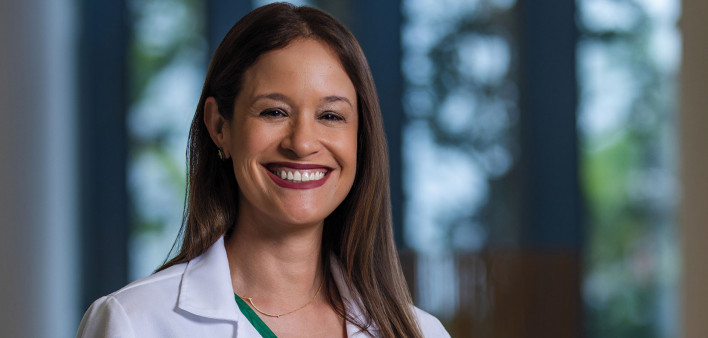
Walk us through the roles of an oncology nurse.
We’ve expanded nursing into so many different areas of cancer care that we now have many opportunities to be involved. For example, we have nurse navigators, who guide patients through that first difficult diagnosis and get them in for their first appointment. We have nurses in the ambulatory center, which means outpatient care. Therapies have advanced so much that we can give many of them in the outpatient setting and also in the home. We have infusion nurses who really just focus on administration of treatment, including chemotherapy. And then we also have, of course, our hospital nurses at the bedside. In addition, we have nurses who help with discharge planning and making sure we’re coordinating care. We also have research nurses who help patients understand clinical trials and the study medications they’re getting. And then we have nurse practitioners—that’s the advanced practice nurse.
As an advanced practice nurse, what care do you provide?
We collaborate with physicians, but we also see patients individually. Many follow-up visits are done by nurse practitioners and also physician associates. It has evolved in recent years. There are so many new cancer patients that we really need people to see our follow-up patients, and nurse practitioners help to fill that gap. I can prescribe medications for supportive care, like anti-nausea or pain medications, order exams or imaging studies and recommend additional non-pharmacologic interventions for supportive care. The scope of the nurse practitioner stops at being able to provide recommendations or prescriptions that are medical interventions.
What should people living with cancer know about oncology nurses?
Patients sometimes don’t understand the amount of advocacy we can do on their behalf. They should ask us any question they have because we’re able to either answer that question, navigate them to the right person or even advocate for things they didn’t know were accessible to them. We’re very resourceful, and we’re able to find ways of supporting our patients. Sometimes, we hear things from patients that doctors don’t hear but that the patients feel comfortable telling us. Then we can talk to the physician and advocate on the patients’ behalf.
What makes oncology nurses unique?
Oncology nurses are special because they see their cancer patients from the beginning of diagnosis all the way to survivorship and end of life. We build very special relationships with our patients. We know when they’re not feeling well. We become part of their family. I think the compassion and the care that we provide as oncology nurses is really different than many other specialties. And the specialty training and education that’s needed to keep up with the very complex therapies nowadays is really something special that allows us to care for our cancer patients in a very precise and personalized way.



Comments
Comments