

Cancer is often difficult to treat in its advanced stages, but several types of cancer can be detected early with regular screenings. Although experts don’t always agree about the age at which screening tests should start or how often they should be done, most do agree that diagnosing and treating cancer early leads to better clinical outcomes.
On the other hand, screening can sometimes detect slow-growing cancer or precancerous abnormalities that never would have been life-threatening. Known as “overdiagnosis,” this can lead to unnecessary treatment and side effects. What’s more, screening tests are not always foolproof, and they may give false-positive (detecting cancer that is not actually present) or false-negative (failing to detect existing cancer) results.
The U.S. Preventive Services Task Force (USPSTF), the American Cancer Society, government agencies and professional organizations periodically update their screening recommendations based on new research. Guidelines are developed by experts who review medical research and consider whether there is enough evidence to show that the benefits of a screening test outweigh its harms. Importantly, these decisions are based on population averages—it is usually not possible to predict the likelihood that a specific individual will develop cancer.
The recommendations summarized below are for preventive screening for people at average risk who currently have no signs or symptoms of cancer. Contact your doctor if you notice an unusual lump, abnormal appearance or change in function anywhere in the body or have symptoms such as prolonged fatigue, unexplained weight loss or pain without a known cause.
Breast Cancer
Breast cancer is the second leading cause of cancer death among women. Breast cancer incidence (new cases) is rising in the United States, but routine screening has contributed to declining mortality.
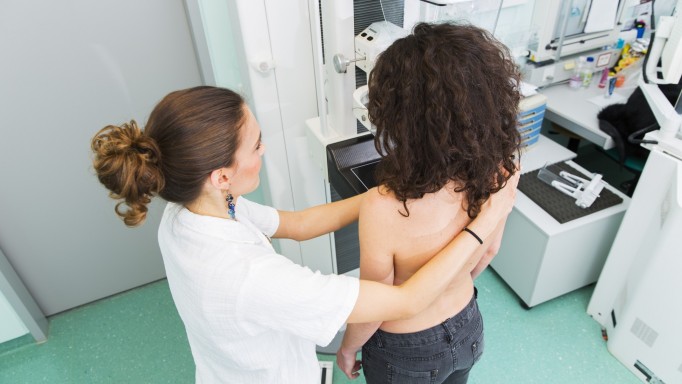
Mammograms are the primary method of breast cancer screening. The procedure uses low-dose X-rays to create a detailed image of the breast, which is compressed between two plates. Ultrasound imaging may be used to detect tumors in women with dense breast tissue, while magnetic resonance imaging (MRI) is sometimes recommended for women at high risk or to confirm a suspicious mammogram finding. Some clinicians perform manual breast exams, and some experts recommend monthly breast self-exams, but there is little evidence that these contribute to improved survival.
Experts don’t agree about how early or how often breast cancer screening should be done. The U.S. Preventive Services Task Force (USPSTF) recommends screening mammograms every two years for women ages 40 to 74, adding that evidence is insufficient for those 75 and older. The American Cancer Society recommends annual screening for women ages 45 to 54; those 40 to 44 also have the option. Those 55 and older can opt for either annual or biannual screening.
When to start screening should be a shared decision between a woman and her health care providers. Those at higher risk, including women with a family history of breast cancer or BRCA gene mutations, those taking menopause hormone replacement therapy and, possibly, African-American women—who tend to get more aggressive breast cancer at a younger age—may benefit from earlier, more frequent screenings.
Cervical, Anal and Oral Cancer
Cervical, anal and many oral (mouth and throat) cancers are caused by human papillomavirus (HPV), a common sexually transmitted infection. They can be prevented with a vaccine.
Cervical cancer is a leading cause of cancer death for women worldwide, but it is uncommon in the United States thanks to routine screening. Widespread HPV vaccination has further reduced cervical cancer rates. Anal cancer is rare overall, but gay and bisexual men and people living with HIV are at greater risk. Rates of oral cancer are rising.
Screening for cervical cancer includes a Pap test (cytology), which uses a small brush to collect a cell sample for examination under a microscope, and testing for high-risk HPV tests.
If abnormal cell changes or precancerous tissue is found, follow-up includes a colposcopy, which uses a lighted magnifying instrument to view the cervix. Precancerous lesions—known as dysplasia or neoplasia—can often be removed or treated locally to prevent progression to invasive cancer.
The USPSTF recommends cervical cancer screening every three years with cytology tests alone for women ages 21 to 29. For those ages 30 to 65, the recommendation is cytology alone every three years or testing for high-risk HPV types, alone or with cytology (known as co-testing), every five years. USPSTF recommends against screening women under 21 or those over 65 who have had adequate prior screening and are not at elevated risk. The American Cancer Society recommends starting at age 25 with HPV testing or co-testing every five years or cytology alone every three years through age 65.
Anal cancer screening methods are similar. In addition to cytology and HPV testing, doctors may perform a digital anal-rectal exam to feel for abnormal growths. Suspicious findings should be confirmed with anoscopy, which uses an instrument to view the anal canal.
The USPSTF and American Cancer Society do not recommend routine anal cancer screening for the general population. However, the International Anal Neoplasia Society advises screening for those at elevated risk, including gay and bisexual men, people living with HIV, organ transplant recipients, those with autoimmune conditions and women with other cervical or other HPV-related cancers. The first national anal cancer screening guidelines for people with HIV were issued in 2024 after a study showed that screening and prompt treatment can prevent progression to cancer, but clinician awareness and availability of high-resolution anoscopy are limited. Recommendations vary according to age, sexual orientation and gender identity.
The USPSTF does not have guidelines for oral cancer screening due to insufficient evidence, but the American Dental Association recommends visual examination for abnormalities during routine dental care.
Colon and Rectal Cancer
Colorectal cancer is the third most common cancer among men and women in the United States (not including skin cancer), and it is increasingly occurring at younger ages.
One type of screening involves physical examination of the inside of the colon and rectum to look for abnormal growths, called polyps, that could progress to cancer. A colonoscopy uses a flexible lighted tube to view the entire colon, while a sigmoidoscopy views the lower part of the colon and rectum. If polyps are detected, they are removed and analyzed. These tests require bowel preparation to clear out the colon beforehand and are typically done under sedation. An alternative is “virtual colonoscopy” using CT scans or X-rays.
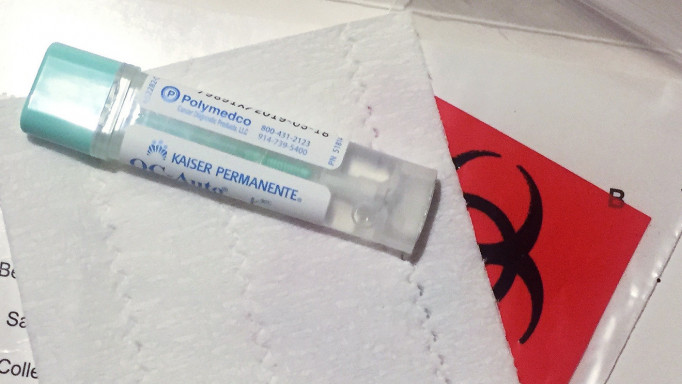
Another type of test looks for blood or abnormal DNA in a stool sample. The samples are typically collected at home and mailed to a lab for analysis. The fecal immunochemical test (FIT) and guaiac fecal occult blood test (gFOBT) detect blood in the stool, while the Cologuard test detects DNA changes that suggest cancer. These tests are not as accurate as a colonoscopy, but some people are more likely to get them done. People with abnormal stool test results should get a follow-up colonoscopy.
The USPSTF recommends colorectal cancer screening for adults ages 45 to 75, though evidence is stronger for those over 50. The American Cancer Society also recommends screening starting at age 45 for people at average risk. People at increased risk—for example those with a family history of colon cancer or polyps or certain hereditary conditions—may need to start screening sooner. Options include a colonoscopy every 10 years, flexible sigmoidoscopy every five years, CT scans every five years or stool blood tests every year. There is less evidence about the optimal frequency of DNA tests.
Liver Cancer
Over years or decades, chronic hepatitis B or C, heavy alcohol use, fatty liver disease and other causes of liver injury can lead to the development of cirrhosis and hepatocellular carcinoma, the most common type of primary liver cancer. This type of cancer is often detected late, and is difficult to treat.
Liver cancer screening involves abdominal ultrasound imaging and alfa-fetoprotein (AFP) blood tests.
Liver cancer screening is not recommended for the general population at average risk. The American Association for the Study of Liver Diseases recommends semiannual screening (approximately every six months) for people with compensated cirrhosis. Routine screening is not advised, however, for those with decompensated cirrhosis (liver failure) unless they are eligible for a liver transplant.
Even after hepatitis C is cured, people who have already progressed to cirrhosis remain at elevated risk, though this is far lower compared with untreated people. The benefits and cost-effectiveness of screening are unclear for people cured of hepatitis C who have less advanced fibrosis, those with chronic hepatitis B who have not developed cirrhosis and those with metabolic-associated steatotic liver disease (MASLD)/metabolic-associated steatohepatitis (MASH) without cirrhosis.
Lung Cancer
Lung cancer is the leading cause of cancer death in the United States for both men and women. Screening for lung cancer, which involves regular low-dose CT imaging of the chest, can detect lung tumors at an early, more treatable stage.
Experts do not recommend lung cancer screening for the general population at average risk. The USPSTF recommends annual screening for people ages 50 to 80 with a 20-pack-year smoking history (equivalent to one pack a day for 20 years) who either currently smoke or have quit within the past 15 years. The American Cancer Society recommends screening for those in the same age range with the same smoking history regardless of how long ago they quit. A positive CT scan should be followed up with a biopsy.
Prostate Cancer
Prostate cancer is the most common cancer among men besides skin cancer, but its death rate is relatively low. Screening can detect aggressive prostate cancer early, allowing for more effective treatment, but routine testing can also find slow-growing precancer or malignancies that never would have become life-threatening.
Two types of tests are used to screen for prostate cancer: the prostate-specific antigen (PSA) blood test, which measures a protein produced by the prostate gland, and the digital rectal exam, in which a finger is inserted into the rectum to feel for lumps or swelling. Follow-up testing for those with an elevated PSA level includes imaging and biopsies. Active surveillance—foregoing immediate treatment and receiving regular monitoring—is an increasingly common option.
Experts disagree about when prostate cancer screening should be done. Because it usually grows slowly, most men with prostate cancer will die of other causes, and unnecessary treatment can lead to side effects such as urinary incontinence and sexual dysfunction.
According to the USPSTF, men ages 55 to 69 should make an individual decision about periodic PSA testing in consultation with their health care provider, taking into account their personal preferences and risk factors. The American Cancer Society recommends that men at average risk should discuss PSA screening starting at age 50. Those at higher risk, including Black men and those with a family history, should do so at age 45, while those at the highest risk (more than one close relative who had prostate cancer at an early age) should do so at 40. The American Urological Association recommends shared decision-making starting at age 45 for men at average risk and 40 for those at higher risk.
Skin Cancer
Skin cancer is the most common type of cancer. Basal cell and squamous cell carcinoma can usually be successfully treated, but melanoma is more likely to spread and become life-threatening. Regular visual examination of the skin—both self-exams and clinical exams—can detect abnormal growths that might be cancerous.
The USPSTF does not make a recommendation about skin cancer screening. The American Academy of Dermatology encourages regular skin self-exams and advises those with new or changed spots, itching or bleeding to consult a dermatologist. Experts can usually distinguish between benign (harmless) moles and those that are malignant or likely to progress to cancer.
When doing a self-exam, use a mirror or ask a friend to help you check all parts of the body, including the palms and soles, nails, scalp and ears. When checking moles, look for the following characteristics:
- A: asymmetrical moles
- B: moles with irregular or ragged borders
- C: moles that contain different colors
- D: moles that are more than a quarter inch in diameter
- E: moles that are evolving, or changing in size, shape or appearance
This recommendation is for preventive screening of people at average risk with no current signs or symptoms of cancer. Regular skin exams are especially important for people at higher risk, such as those with light skin, a weakened immune system or certain genetic conditions.
For more information on cancer screening, visit:
Last Reviewed: April 16, 2025