

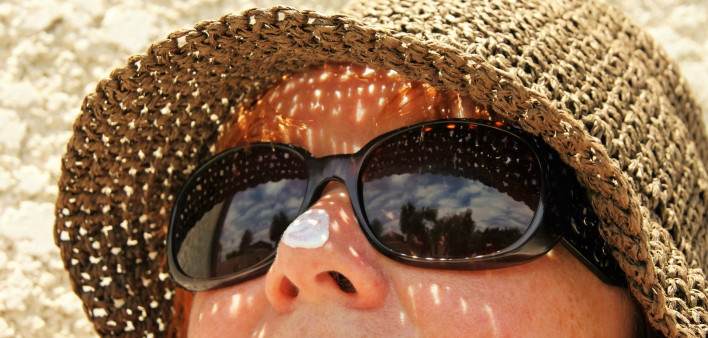
Australians are reeling after a trusted consumer advocacy group found that several of Australia’s most popular—and expensive—sunscreens do not provide the protection against the sun that its makers claim they do, according to BBC.com. What’s more, the news traveled across the globe as former President Joe Biden and celebrity chef Gordon Ramsay shared with the public their own skin cancer diagnoses and treatment.
Choice Australia tested 20 sunscreens in an independent accredited Australian lab and found that 16 do not meet the SPF (sun protection factor) rating listed on the product. In fact, some offer next to no sun protection at all.
The primary risk factor for skin cancer is exposure to ultraviolet (UV) radiation from the sun or tanning beds. People who spend a lot of time outdoors and individuals with pale skin who sunburn easily are at greatest risk. But people with dark skin can also develop skin cancer.
Skin cancer is a common health concern in Australia, where UV radiation levels are typically higher than other parts of the world. In fact, about two out of three Australians will be diagnosed with some form of skin cancer during their lifetime. What’s more, each year, over 2,000 Australians die of skin cancer.
To prevent skin damage and cancer, Australian public health campaigns have long encouraged sunscreen use, hats and limited exposure to the sun.
According to the analysis, Ultra Violette’s Lean Screen SPF 50+ Mattifying Zinc Skinscreen, which retails for more than A$50 ($33), was the “most significant failure” identified.
In an initial statement, Ultra Violette said the product was safe and effective, but less than two months later, the company announced that it would recall Lean Screen after the product yielded inconsistent results in eight different rounds of lab testing. Ultra Violette added that it has ended its relationship with the testing lab it originally worked with.
Other products that did not meet their claimed SPF level included those from Neutrogena, Banana Boat and popular Australian brands Bondi Sands and the Cancer Council. All these companies rejected Choice’s findings and said their own independent testing proved their sunscreens worked as advertised.
In response to the uproar, Australia’s Therapeutic Goods Association, a government authority responsibly for evaluating, assessing and monitoring therapeutic goods (essentially medicines), said it would investigate the findings and “take regulatory action as required,” according to BBC.com. Choice Australia also urges TGA to conduct additional investigations into other sunscreen products on the market.
In other skin cancer news, President Joe Biden and celebrity chef Gordon Ramsay both recently shared their own cancer stories.
Last week, Biden spokesperson Kelly Scully confirmed that the former president had undergone surgery to remove skin cancer lesions on his forehead, reports the The Associated Press. In May, Biden announced that he had been diagnosed with an aggressive form of prostate cancer that had spread to his bones.
“Cancer touches us all,” Biden wrote on social media at the time. “Like so many of you, Jill and I have learned that we are strongest in the broken places.” During his presidency, he relaunched the Cancer Moonshot initiative to boost cancer research, prevention and treatment. It earned him a spot on our 2023 Cancer Health 25: Champions of Health Equity. His write-up read:
As vice president in 2016, Joe Biden launched the federal Cancer Moonshot initiative. As president, he supercharged the program that aims “to cut the cancer death rate in half in the next 25 years [and] end cancer as we know it.” In support of the initiative, the National Cancer Institute unveiled a National Cancer Plan that sets eight goals, one of which is to “eliminate disparities in cancer risk factors, incidence, treatment side effects and mortality.” Biden lost a son to brain cancer: Major Beau Biden was stationed overseas where he was exposed to hazardous burn pit emissions, known to be carcinogenic. Last year, Biden championed and signed the PACT Act, legislation that improves health care and benefits for veterans—many from minority and underprivileged communities—who were exposed to toxic and cancer-causing substances.
View this post on Instagram
Ramsay shared via Instagram that he also had cancer removed near his ear after doctors found basal cell carcinoma, the most common form of skin cancer that typically develops in areas exposed to the sun.
“Please don’t forget your sunscreen this weekend. I promise you it’s not a face lift! I’d need a refund,” Ramsay wrote via Instagram.
View this post on Instagram
To learn more, click #Sunscreen or read Cancer Health’s Basics on Skin Cancer. It reads in part:
What is skin cancer?
Cancer develops when cells grow out of control. Skin cancer is the most frequently diagnosed type of cancer. Basal and squamous cell skin cancers are most common and are usually treatable. Melanoma is less common but more likely to spread and become life-threatening. Other cancers that affect the skin include Merkel cell carcinoma, some types of lymphoma and Kaposi sarcoma. (See separate Basics about melanoma, lymphoma and Kaposi sarcoma.)
Basal and squamous cell skin cancers typically develop in areas exposed to the sun, but they also can occur elsewhere. Squamous cells make up the upper layer of the skin, or epidermis, while basal cells are found further down. As cancer progresses, it may involve the underlying deep layer of the skin, or dermis.
Melanoma affects melanocytes, or pigment-producing cells in the skin. Merkel cell carcinoma involves neuroendocrine cells in the skin. Kaposi sarcoma, a cancer of the lining of blood and lymph vessels, can occur anywhere in the body but often appears as skin lesions.
What are the symptoms of skin cancer?
Unusual changes in the skin may be a sign of skin cancer. Signs of squamous and basal cell cancer may include:
- Pale or yellow flat patches that resemble scars
- Red, scaly or itchy patches
- Shiny pink or red or pearly bumps
- Growths with raised edges and a depression in the center
- Open sores with oozing or crusted areas
- Sores that don’t heal or keeping coming back
- Wart-like growths.
Some squamous and basal cell cancers are flat and look similar to normal skin. New or changing moles may be a sign of melanoma and should be reported to your doctor.
Basal cell cancers usually do not spread beyond the skin. Squamous cell cancers are more likely to spread, but this is still uncommon. Melanoma is most likely to spread to other parts of the body, a process known as metastasis. Imaging scans may be done to see how much the cancer has progressed.




Comments
Comments