


“We’re scheduling your surgery for later this week” is how I learned I was going to lose my left testicle. I then foolishly asked whether I would ever get it back.
At age 29, I wasn’t a child anymore, but I didn’t feel like an actual adult. I’d lost a job and therefore my health insurance. After joining my now ex-wife’s employment-based health insurance policy, I could “afford” (with the help of a crowdfunded care plan) the lifesaving surgery to remove Stage II testicular cancer from my body.
Three surgeries and nine weeks of chemotherapy later, I was declared cancer-free. Five years after that, my oncology team “released me back into the wild,” as I call the return to general healthcare, outside of cancer surveillance. I am now eight years cancer-free, continuing to live day by day.
Throughout the years, I’ve heard all sorts of terms applied to my experience.
“Survivor” is the best way to put it. Nobody “thrives” through trauma. We survive trauma if we’re lucky, and sometimes, if we’re even luckier, we come out stronger. I grew up in deep east Texas, where being Latino felt alienating and being queer felt unthinkable. I was bullied for being both and never really knew what safety in myself could feel like.
Then, my own body, the space I occupy 100% of the time, betrays me. My own body is not safe. I am forced to part with my left testicle: a key part of my identity as a man. The vulnerabilities of my personhood deepen and crystallize. How can I feel safe as myself when every part of my being has shown me that I can lose anything at any time?
Well, I guess that’s the answer.
Amid loss, I’ve learned that the only way to navigate this life is through it. “Safety” is such a fickle guarantee. Surviving life events is how you show yourself and others a pathway, even if that path wasn’t very well lit for you. I’m still figuring this all out, but the truth is, I’m grateful for the opportunity to show that survivorship is messy. Survivorship is nonlinear. Survivorship doesn’t always feel like a celebration.
Same goes for pride.
Pride goes beyond parades and rainbow washing. Pride is a state of being, and in a lot of ways, my survivorship and pride in myself evolved concurrently. I realized that my anatomy wasn’t what defined me as a man, and I realized there’s nothing gained by hiding who I really am. At the end of the day, my identity is for me alone. However, I can approach my lifesaving work as an advocate at the American Cancer Society Cancer Action Network (ACS CAN) with pride as a survivor and trust that authentic folks will want to embrace people like me. I’m proud of the work ACS CAN has done in creating a welcoming space for folks from all walks of life to join in the fight against a common threat: cancer.
People tend to function better when they are truly able to embrace themselves, their strengths and values. I’m proud this organization fosters such a culture.
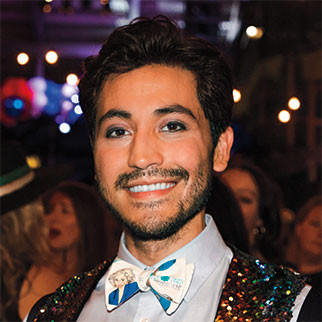
Kyle DeLeonCourtesy of Kyle DeLeon
Kyle DeLeon is a senior state and local advocacy operations manager at the American Cancer Society’s nonprofit, nonpartisan advocacy affiliate, Cancer Action Network.




Comments
Comments