

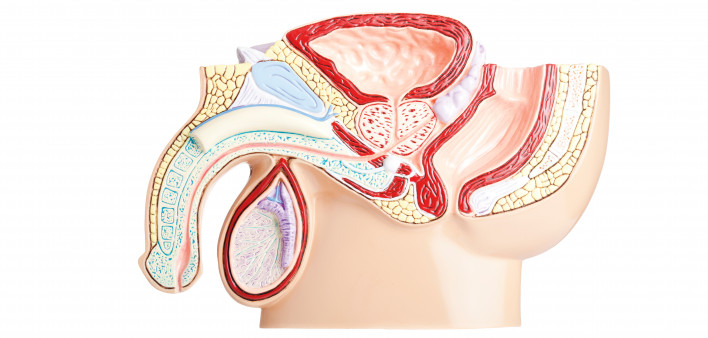
Robot-assisted surgery can spare nerves and help avoid sexual dysfunction and urinary incontinence in men with prostate cancer. Greg Shaw, MD, of University College London, and colleagues evaluated a robotic surgery technique known as NeuroSAFE that spares nerves that run through the prostate’s outer layers. The method includes testing during surgery to see whether more cancerous tissue needs to be removed.
The Phase III study enrolled men of all ages with nonmetastatic prostate cancer. The analysis included 173 patients randomly assigned to undergo NeuroSAFE surgery and 171 who underwent standard robot-assisted radical prostatectomy. After a year of follow-up, 39% of men in the NeuroSAFE group had no or mild erectile dysfunction compared with 23% in the standard surgery group. What’s more,
NeuroSAFE recipients were more likely to report good erectile function (20% versus 14%) and less likely to have severe dysfunction (38% versus 56%). A similar proportion of men in both groups regained full continence by 12 months, but NeuroSAFE recipients recovered urinary control faster. “Our results show that by using NeuroSAFE, nearly twice as many men don’t have to face potentially life-changing loss of erectile function after prostate surgery,” says Shaw.




Comments
Comments