

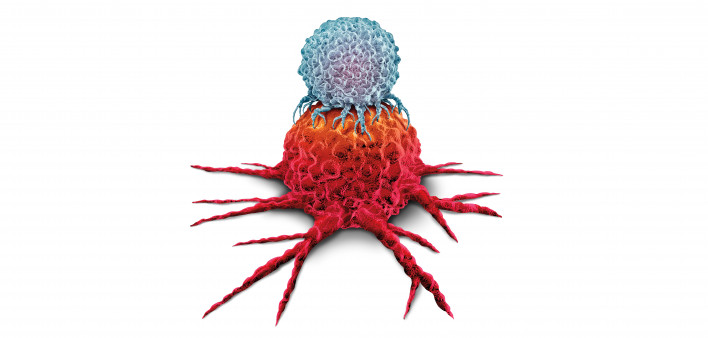
Treatment with the checkpoint inhibitor Jemperli (dostarlimab), which unleashes T-cell activity, allows many people with mismatch repair deficient (dMMR) cancer to forgo surgery and maintain their quality of life, according to a study presented at the American Association for Cancer Research annual meeting.
Jemperli made headlines in 2022 when Andrea Cercek, MD, of Memorial Sloan Kettering Cancer Center, reported that all 12 patients with advanced rectal cancer who finished six months of treatment achieved complete remission. The Phase II trial was later expanded to other cancers. The latest analysis included 117 previously untreated patients with Stage I, II or III dMMR solid tumors. People in Cohort 1 had rectal cancer, while those in Cohort 2 had various malignancies, including bladder, endometrial and prostate cancers.
All 49 rectal cancer patients treated with Jemperli for six months had a clinical complete response and avoided surgery. In the second cohort, 35 of the 54 (65%) had a complete response, and 33 opted to forgo surgery. Some who did not achieve a complete response still experienced substantial tumor shrinkage.
“This study shows that immunotherapy can replace surgery, radiation and chemotherapy for mismatch repair deficient solid tumors, which could help patients preserve their organs and avoid the harsh side effects of chemo and radiation,” Cercek says.




Comments
Comments