

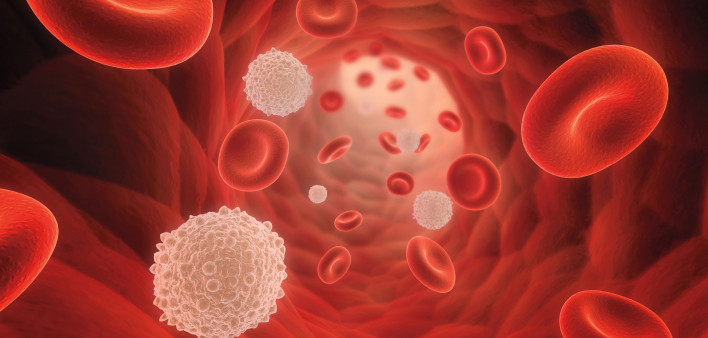
Leukemia and lymphoma are both blood cancers, but they have some distinct characteristics and different therapies. With advances in treatment, many people with these malignancies can be successfully treated, and for some patients, “watchful waiting” may be an option.
Leukemia affects blood-forming stem cells or immature blood cells, mostly white blood cells that carry out immune responses. Abnormal cells can grow out of control in the bone marrow and enter the bloodstream before fully developed, crowding out mature, functional blood cells.
Leukemia is classified by the type of affected cells, whether it is acute (fast-progressing) or chronic (slow-growing) and whether it strikes adults or children. The four main types are acute lymphoblastic leukemia (ALL), chronic lymphocytic leukemia (CLL), acute myeloid leukemia (AML) and chronic myeloid leukemia (CML). Overall, leukemia occurs most often among people over age 60, but ALL is the most common childhood cancer.
Lymphoma occurs when white blood cells known as lymphocytes grow out of control. It usually involves B cells, but some forms affect T cells or natural killer cells. Lymphoma starts in the lymphatic system, the network of lymph vessels and organs that play a role in immune function and waste removal.
There are two types, Hodgkin lymphoma and non-Hodgkin lymphoma (NHL), each of which has several subtypes. In Hodgkin lymphoma, large abnormal lymphocytes called Reed-Sternberg cells build up in the lymph nodes. The most common type of aggressive NHL is called diffuse large B-cell lymphoma, while follicular lymphoma is the most common indolent, or slow-progressing, type.
Sometimes the distinction between leukemia and lymphoma is not straightforward. CLL, for example, is basically the same disease as small lymphocytic lymphoma (SLL), but abnormal B cells are more likely to be found in the bloodstream in people with CLL versus the lymph nodes in those with SLL.
Treatment for leukemia and lymphoma varies according to the type of disease, how fast it’s progressing, how much it has spread and the patient’s age and previous treatment history.
In some cases, treatment for less aggressive disease can be delayed while a patient is monitored for signs of disease progression, known as active surveillance. Those who need treatment typically receive some combination of chemotherapy, targeted therapy, immunotherapy and sometimes radiation, often moving from one regimen to the next as relapse occurs. A stem cell transplant may be an option after other therapies have failed. While some people respond well to treatment and experience long-term remission, recurrence is common.
Cancer treatment has improved dramatically in recent decades, and leukemia and lymphoma have led the way. Gleevec, approved in 2001 to treat CML with a specific mutation, was the first targeted therapy that inhibits a protein that drives cancer growth. The first two CAR-T therapies—which involve reprogramming a patient’s T cells to attack their cancer—were approved in 2017 for children and young adults with ALL and adults with large B-cell lymphoma. Building on this momentum, many clinical trials are underway to test new experimental therapies for these and other blood cancers.

Comments
Comments