

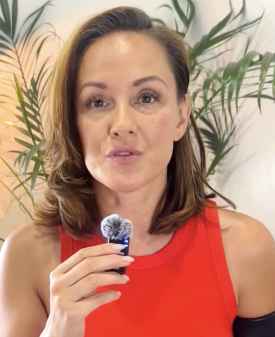
Hallmark actress Yan-Kay Crystal Lowe, 44, shared in an essay in People that she has been diagnosed with Stage III breast cancer.
After first noticing a large mass in her breast in February 2025, the Canadian mother of two underwent a mammogram and ultrasound, neither of which detected cancer. A couple of months later, however, the mass had grown and migrated, and her nipple had become inverted.
A biopsy revealed that Lowe had invasive ductal carcinoma, the most common form of breast cancer. Invasive ductal carcinoma begins in the milk ducts and spreads to surrounding tissue. Nearly 317,000 women will be diagnosed with invasive breast cancer this year, according to the American Cancer Society (ACS).
After additional testing, doctors told her she had Stage III invasive ductal carcinoma and that her treatment would involve chemotherapy, a double mastectomy and radiation.
“As someone who’s never had any major illness, it was a lot to digest,” Lowe wrote. “I went on social media, desperate to find other women like me—which is a big reason I’m sharing this story with People. Hearing other people’s stories and absorbing their amazing tips, like asking for ice chips or a bag of saline when you go in for chemo, has helped more than I can say.”
View this post on Instagram
Breast cancer is the second most common cancer among women, after skin cancer. About one in eight women in the United States will be diagnosed with invasive breast cancer during their lifetime, according to Cancer Health’s Basics on Breast Cancer.
Lowe shared that she finished her first round of chemo and will continue treatment to shrink the tumor before undergoing surgery to remove it.
Lowe has been an actor and director for nearly 30 years. Since 2013, she has starred in Hallmark’s television film series Signed, Sealed, Delivered. In her essay, she expressed deep gratitude for her friends, family and Hallmark colleagues for their unwavering support since her diagnosis.
She also encouraged other women to get tested for breast cancer and prioritize their scheduled mammograms.
Lowe wrote: “This journey has been scary, strange, and humbling. It has stripped me down in ways I never saw coming, physically, emotionally and spiritually. And yet...I promise to persevere. To turn poison into medicine. To grow. That’s what I’m learning every single day.
“If you’re walking a hard road too, just know, you’re not alone. We may not get to choose what happens to us, but we do get to choose how we meet it. And I’m meeting it—with my sword raised, my heart open, and taking it one step at a time.”
Thanks to advancements in early cancer detection and treatment, there are more than 4 million breast cancer survivors in the United States currently. By 2035, the number of breast cancer survivors will reach 5.3 million, according to the ACS.
To learn more, click #Breast Cancer or read Cancer Health’s Basics on Breast Cancer. It reads in part:
What are the symptoms of breast cancer?
The most common sign of breast cancer is a lump or mass. A hard and painless mass is most likely to be malignant, but cancerous tumors can sometimes be tender, soft or painful. Other symptoms may include breast swelling, skin irritation or dimpling, breast or nipple pain, nipple retraction (turning inward), redness, scaliness or thickening of the nipples or skin of the breast and discharge from the nipple.
How is breast cancer diagnosed?
Regular screening for breast cancer can detect the disease early, when it is easier to treat. Professional guidelines vary in how often they recommend screening. The U.S. Preventative Services Task Force now recommends that women at average risk should start screening at age 40. All women and men who notice a new mass, lump or other changes in their breasts should report this to their health care provider.
If a mammogram detects changes in the breasts, an ultrasound may be done for further examination. Once diagnosed with breast cancer, MRI scans are usually done to assess the size of the tumor, look for additional tumors and determine whether the cancer has spread beyond the breasts.
A breast biopsy, or examination of a tissue sample, may be done to determine whether a tumor is malignant. Genomic testing of a tumor sample provides more information about the type of cancer and how best to treat it.



Comments
Comments