

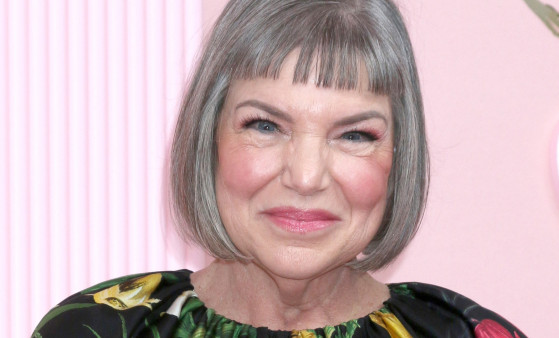
Nearly 14 years after successful treatment for breast cancer, actress Mindy Cohn shared she has cancer again. Beloved for her role at Natalie in 1980s hit sitcom Facts of Life and most recently in Palm Royale, Cohn posted her health update via Instagram. She also thanked her treatment team and hospital staff.
“Have been off social media for a while ’cuz I had to go kick cancer’s ass. I did so with the extraordinary help of Providence Saint John’s hospital staff,” the post begins. “Recouping for another couple of weeks and then ready for my next adventure. onwards! F**K Cancer!”
The image posted on Instagram shows Cohn, who will turn 60 next month, in a hospital bed, giving a thumbs up.
View this post on Instagram
In 2012, Cohn was diagnosed with breast cancer following the discovery of a lump during a routine doctor appointment. She underwent a double mastectomy, chemotherapy and radiation before announcing she was cancer free in 2017.
“I’ve always been an optimist,” Cohn told People Magazine at the time. “But the cancer metastasized. It kept spreading and coming back. I kept waiting for the other shoe to drop, and then it would. And then I’d wait for another shoe to drop, and it would. I was frustrated and enraged. I couldn’t control any of this. I couldn’t fix it.”
Cohn did not disclose what type of cancer she currently has.
She received an outpouring of love and support from various celebrities, including Andy Cohen, Sarah Paulson, Rosie O’Donell, Jerry O’Connell and more.
Breast cancer is the second most common cancer for women in the United States (behind skin cancer) and accounts for 1 in every 3 female cancer cases, according to the American Cancer Society. On average, women have a 13% chance (1 in 8) of developing breast cancer in their lifetime. Breast cancer mainly occurs in middle-age and older women, but incidence rates have increased by 1% per year, with more younger women developing breast cancer every year.
Black women are more likely to die from breast cancer than any other race or ethnicity, thought partially due to Black women having a higher risk of triple-negative breast cancer, an aggressive and invasive cancer that has fewer treatment options and worse outlooks. Early detection and treatment of breast cancer improve overall outcomes. Because once the cancer spreads elsewhere in the body, or metastasizes, it is harder to treat.
To learn more about breast cancer symptoms, classifications and risk factors, read Cancer Health’s Breast Cancer Basics. It reads in part:
“How is breast cancer classified?
Breast cancer usually arises in ducts in the breast that produce milk. Other types start in the cells of the muscle, fat or connective tissue. Less common types include inflammatory breast cancer, Paget disease and angiosarcoma. Ductal carcinoma in situ (DCIS) means that the cancer has not yet spread. As it progresses, breast cancer can invade surrounding tissues and nearby lymph nodes. Metastatic, or Stage IV, breast cancer has spread elsewhere in the body, often affecting the liver, bones or brain.
Breast cancer is classified according to the types of receptors it expresses. A majority of breast tumors carry estrogen or progesterone receptors (hormone receptor positive) and can be treated with hormone therapy. Others express HER2 receptors and can be treated with HER2 inhibitors such as Herceptin (trastuzumab). Triple negative breast cancer (TNBC) does not express any of these receptors and is more difficult to treat.
Who gets breast cancer?
Breast cancer is the second most common cancer among women, after skin cancer. Nearly 300,000 women are diagnosed with invasive cancer annually, according to the American Cancer Society. Men can also develop breast cancer, but this is rare. People with BRCA mutations are at high risk for breast cancer.
Around a quarter of women with early breast cancer will go on to develop metastatic disease. About 15% of breast cancer patients have hard-to-treat TNBC, which is more common among young women and Black women.
What are the risk factors for breast cancer?
According to the CDC, besides being a woman and getting older, other factors that influence the risk of developing breast cancer include:
- Genetic mutations (including BRCA1 and BRCA2)
- Family history of breast cancer
- Early onset of menstruation or early menopause
- No full-term pregnancies or first pregnancy at an older age
- Not being physically active
- Overweight or obesity, especially after menopause
- Use of oral contraceptives or hormone replacement therapy
- Previous radiation therapy
- Drinking alcohol
What are the symptoms of breast cancer?
The most common sign of breast cancer is a lump or mass. A hard and painless mass is most likely to be malignant, but cancerous tumors can sometimes be tender, soft or painful. Other symptoms may include breast swelling, skin irritation or dimpling, breast or nipple pain, nipple retraction (turning inward), redness, scaliness or thickening of the nipples or skin of the breast and discharge from the nipple.”
Learn more about recent breast cancer news by clicking #breast cancer.



Comments
Comments