

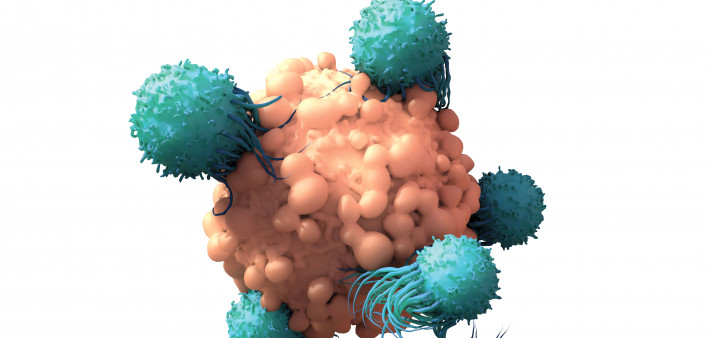
Messenger RNA (mRNA) COVID-19 vaccines may improve the effectiveness of checkpoint immunotherapy, according to a study presented at the European Society for Medical Oncology Congress.
In preclinical studies, mRNA vaccines increased production of type I interferon, a cytokine that enables innate immune cells to prime the activity of cancer-fighting T cells. In addition, vaccinated cancer patients showed increased expression of the PD-L1 protein on tumors, the target of many immune checkpoint inhibitors.
An analysis of medical records from more than 1,000 cancer patients showed that those who received a Moderna or Pfizer COVID vaccine within 100 days of starting checkpoint inhibitors were twice as likely as unvaccinated people to live for three years. Vaccine recipients with advanced lung cancer had a median survival time of 37 months, compared with 21 months for unvaccinated people; 56% and 31%, respectively, were still alive at three years. Likewise, among people with metastatic melanoma, the median survival was 27 months for unvaccinated patients but not yet reached for those who received the vaccines because a majority were still alive; three-year survival rates were 44% and 68%. The improvement was especially notable for people with immunologically “cold” tumors that don’t respond as well to immunotherapy. In contrast, the researchers did not see the same survival advantage for cancer patients who received non-mRNA vaccines, such as flu shots.
“This study demonstrates that commercially available mRNA COVID vaccines can train patients’ immune systems to eliminate cancer,” says Adam Grippin, MD, PhD, of the University of Texas MD Anderson Cancer Center. “When combined with immune checkpoint inhibitors, these vaccines produce powerful antitumor immune responses that are associated with massive improvements in survival for patients with cancer.”



Comments
Comments