

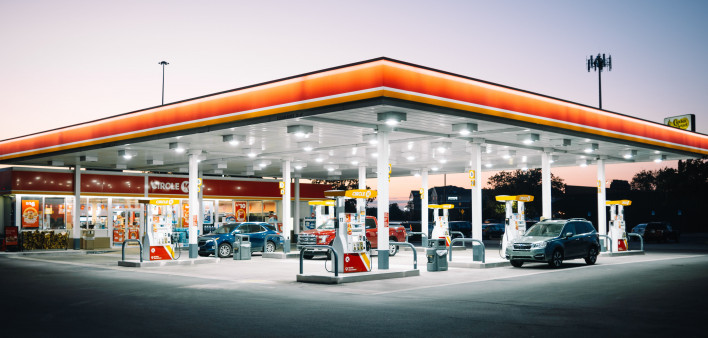
Children who live within 250 meters (820 feet) of a gas station are more likely to develop leukemia or other childhood cancers; what’s more, the risk increases the closer the child’s home is to the gas pump, according to findings of a study published in Environmental Pollution.
“Research suggests that only 5% to 10% of childhood cancers are attributable solely to genetics, while the rest are due to other factors, particularly environmental ones,” said senior researcher and study author Stéphane Buteau, PhD, in a press statement from the University of Montreal, where Buteau is a professor in the Department of Environmental and Occupational Health.
Leukemia, a blood cell cancer, is the most common cancer diagnosed among children and teenagers. In fact, one out of three young people living with cancer have a type of leukemia, according to the American Cancer Society.
The cause of childhood leukemia is unknown. The Leukemia Research Foundation notes that certain genetic syndromes, such as Down syndrome, neurofibromatosis and Fanconi anemia, or medications, like chemotherapy or immunosuppressants, increase risk. Environmental exposure to radiation, chemicals, pesticides or infections can also increase risk.
The air pollutant benzene, used in industrial manufacturing and found in gasoline and cigarette smoke, has been shown to play a role in the development of childhood cancer. The chemical is released into the air during gasoline storage, vehicle refueling and the unloading of tanker trucks, but the extent to which benzene exposure from gas stations contributes to cancer risk on children was previously unknown.
Canadian researchers used administrative health data for 1,535 children born in Quebec between 2007 and 2020 who developed cancer before age 15. Using the residential addresses of those who developed childhood cancer, the researchers assessed benzene exposure by the number of gas stations within a 250-meter radius, distance to the nearest gas station and a composite measure of distance and number of gas stations.
Living within 250 meters of at least one gas station was associated with a higher childhood cancer risk. As the distance to the gas station drew closer to 100 meters, the risk increased. Compared with newborns with no gas stations within 500 meters, newborns living within 100 meters of a gas station were 14% more likely to develop any cancer, 35% more likely to develop leukemia and 27% more likely to develop acute lymphoblastic leukemia.
Controlling vapor emissions at gas stations may limit increased childhood cancer risk. When researchers excluded Montreal, which prohibits the transfer of petroleum products to gas stations or tanker trucks without vapor recovery systems, the likelihood of any cancer diagnosis was 42% greater for any cancer and 55% greater for leukemias.
“Such measures are simple and not costly to implement, and they would deliver major health benefits and help reduce inequalities in exposure levels,” said Buteau.
To learn more about childhood cancer, read Cancer Health’s Basics on Leukemia or click #Childhood Cancer.



Comments
Comments