

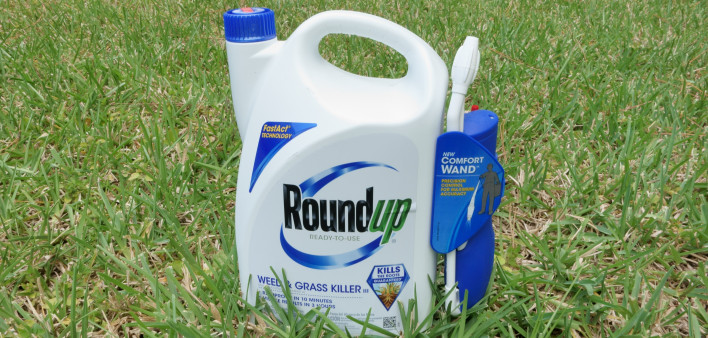
Amid thousands of cancer lawsuits against Roundup, a popular herbicide linked to cancer through the active ingredient glyphosate, its manufacturer, German pharmaceutical and biotech company Bayer, proposed a $7.25 billion settlement last week, reports The Associated Press (AP). Within 24 hours of Bayer’s announcement, President Trump signed an executive order calling for continued production of pesticides containing glyphosate.
Bayer maintains that glyphosate is safe to use—specifically, that it doesn’t cause non-Hodgkin lymphoma, a type of blood cancer.
The settlement, which is still awaiting the Supreme Court’s approval, would stave off further lawsuit costs for Bayer. “Litigation uncertainly has plagued the company for years, and this settlement gives the company a road to closure,” said Bayer CEO Bill Anderson, according to the AP. (Roundup was originally manufactured by Monsanto, which Bayer acquired in 2018.)
Whether glyphosate causes cancer has been widely debated by the scientific community. In 2015, the International Agency for Research on Cancer (IARC) at the World Health Organization classified glyphosate as “probably carcinogenic to humans” based on limited evidence in humans and sufficient evidence in animal studies following a review of approximately 1,000 studies. In 2022, the Environmental Protection Agency (EPA) concluded that glyphosate was not carcinogenic and posed no harm to human health but may pose a risk to the environment. However, this finding was overturned by the U.S. Court of Appeals for the Ninth Circuit, which ruled that the EPA selectively dismissed data.
A 2019 study linked glyphosate-based herbicide exposure to a 41% increase in risk of non-Hodgkin lymphoma. A 2025 study from George Mason University found that low doses of Roundup caused multiple types of cancer (including blood cancer) in rats, supporting IARC’s 2015 conclusion about glyphosate.
To learn more about non-Hodgkin lymphoma and other blood cancers, click #Blood Cancer.
Earlier this year, the journal Regulatory Toxicology and Pharmacology retracted a paper from 2000 that served as the hallmark piece of evidence for glyphosate safety. The paper’s data relied heavily on unpublished work from Monsanto, the original manufacturer of Roundup.
Despite growing evidence that glyphosate exposure increases cancer risk, President Trump signed an executive order on February 18 calling for continued production of pesticides containing glyphosate.
“Lack of access to glyphosate-based herbicides would critically jeopardize agricultural productivity, adding pressure to the domestic food system,” argued Trump in the order.
In April, the Supreme Court is set to hear Bayer’s appeal that the EPA’s approval of Roundup without a cancer warning should invalidate claims filed in state courts. According to a separate AP article, Bayer faced about 181,000 claims by residential users against Roundup, leading to the removal of glyphosate from the product.
“It’s a sad day in America when our highest court agrees to consider depriving thousands of Roundup users suffering from cancer of their day in court,” Lori Ann Burd, environmental health director at the Center for Biological Diversity, told the AP.
To read more about Roundup lawsuits and the glyphosate controversy, read “Why Is a 4-Decade-Old Pesticide Back in the News? The Story of Glyphosate,” “Bayer to Pay $10 Billion to Settle Roundup Cancer Lawsuits” and “The Weed Killer Roundup Contributed to Man’s Cancer, Says Jury.”




Comments
Comments