

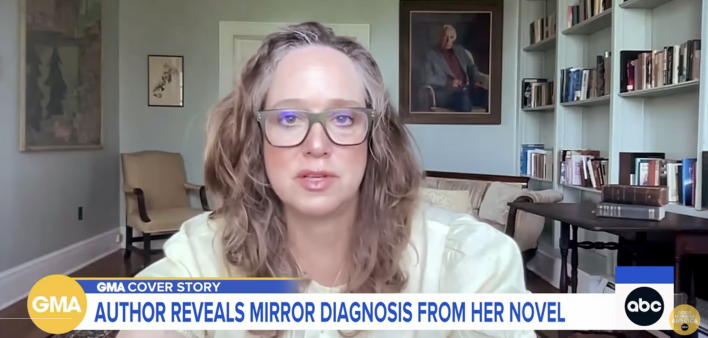
The main character of Caitlin Shetterly’s second novel, The Gulf of Lions, is a woman with breast cancer named Alice. Six months after Shetterly sent the manuscript of the book to her editor, the author was diagnosed with cancer in her left breast, the exact same cancer in the same breast as Alice.
“It was a cold spring morning when a nurse practitioner called me to deliver the news…. In that moment, the division between myself and my main character broke,” Shetterly wrote in People. “I didn’t know whom to call. It seemed like the only person who could truly understand what I was going through was Alice, my fictional friend.”
View this post on Instagram
In The Gulf of Lions, Alice and her two daughters go backpacking through the French countryside, starting in the Alps and heading south to the Gulf of Lions in Provence. The trip is a much-needed break following Alice’s yearlong battle with breast cancer. Throughout the trip, Alice reflects on her marriage, motherhood and cancer survival.
Alice was diagnosed with Stage IIA hormone-positive breast cancer; Shetterly had Stage IB hormone-positive breast cancer. When cancer cells have proteins that detect either estrogen or progesterone, they are considered hormone-positive cancers. Whether a cancer is hormone-positive or hormone-negative can determine the best treatment option, since keeping estrogen and progesterone from binding to the cancer can prevent growth and spread. About three out of four breast cancers are hormone positive, and the proportion is higher in older women, according to American Cancer Society.
A breast cancer’s stage depends on the size and spread of the cancer cells as well as whether it is hormone positive or negative. BreastCancer.org describes Stage IB as small groups of cancer cells (larger than 0.2 millimeters and smaller than 2 mm) in the lymph nodes with or without the presence of a small tumor in the breast. Breast cancers in stage IIA can have groups of cancer cells larger than 2 mm in one to three axillary lymph nodes (under the arm) or near the breast bone, a breast tumor 2 centimeters or smaller that spread to the axillary lymph node or a breast tumor larger than 2 cm and smaller than 5 cm that has not spread to the axillary lymph nodes.
Breast cancer is the second leading cause of cancer death among women, following lung cancer; indeed, any woman’s chance of dying of breast cancer is 1 in 43. Earlier diagnoses of breast cancer through screening and increased awareness as well as better treatment options have increased the likelihood of breast cancer survival over time. Still, breast cancer incidence has increased by 1% each year, mostly in women younger than 50 years old.
To learn more about breast cancer, read Cancer Health’s Breast Cancer Basics or click #BreastCancer.
“I had meticulously researched cancer, this kind of cancer, this woman’s cancer,” said Shetterly in an interview on Good Morning America (GMA). “I wrote this long before I had cancer.”
View this post on Instagram
While her book was being edited process, Shetterly underwent a lumpectomy and lymphadenectomy, a breast-conserving surgery that removed cancerous cells, followed by five weeks of radiation. When she got the book back from her editor, she checked that all the “cancer parts” felt true. She didn’t end up changing a single word.
“I wrote a book about a woman who doesn’t just survive cancer, but she thrives after it, and that was really important to me,” Shetterly said on GMA.



Comments
Comments