

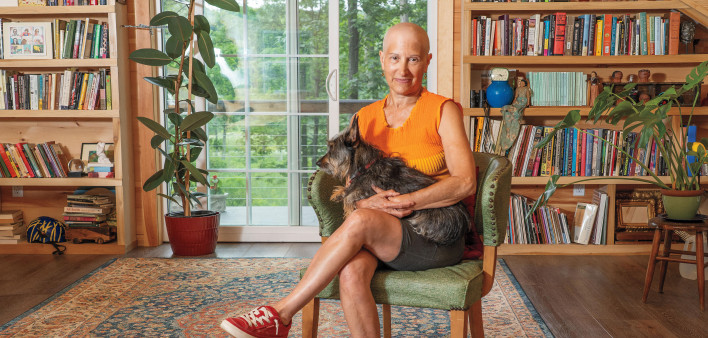
Emily Rubin was diagnosed with Stage II breast cancer in 2008. After a lumpectomy and the removal of eight lymph nodes, followed by chemotherapy and radiation, she completed treatment in 2010. Shortly afterward, her debut novel, Stalina—about a Russian immigrant who comes to the United States after the fall of the Soviet Union—was awarded a publishing contract, and she launched the Write Treatment Workshops for cancer patients, survivors and caregivers. Cancer Health interviewed Rubin in January for our Can Heal column, which focused on the curative effects of art and writing. She had been cancer-free nearly 15 years and was running six Zoom workshops a month for Mount Sinai’s cancer centers in New York City as well as several other workshops for the New York Oncology Hematology Community Cancer Foundation. Many of the resulting works were published in The Write Treatment Anthology Volume 1: 2011–2016 and Volume 2: The Pandemic Years. Book sales benefit the workshops, which are free to participants.
While our spring issue was at the printer’s, Rubin was diagnosed with triple-negative breast cancer—technically, not a recurrence but a second cancer—and began treatment. This unfortunate turn also presented a unique opportunity. Would she be interested, we wondered, in penning an essay about her experiences? Of course, like a true artist and champ, she accepted the challenge. —Trent Straube
A New Diagnosis
In January of this year, after 15 years in remission from breast cancer, to my shock and surprise, a breast surgeon discovered a lump during a routine follow-up exam. This anomaly of concern had not shown up on my yearly mammogram and ultrasound just two weeks prior.
“Have you felt this before?” the doctor asked when she examined me.
I was silent with panic as I fingered the lump. My knees cracked, and I answered.
“I don’t think so?”
I’m not shy about doing self-exams, but this lump felt new and different from my normal dense breast tissue. Scans and a needle biopsy were scheduled for the targeted area immediately.
One, two—the scans were done, and I remained on the ultrasound exam table for the needle biopsy. As I lay waiting, my forehead tensed, and the back of my head felt like large screws were being tightened. Yes, I was nervous, and I tried to keep calm, saying to myself, It’s better to know—it’s probably nothing, like all the other times the last 15 years. But as the instrument tray rattled into position and the doctor assured me it would be a quick procedure, my eyes burned, and fragmented sense memories of nausea, hair loss and feeling and looking like an extraterrestrial flashed into my thoughts like Polaroids developing right before my eyes. Holding my breath did not block the flow of tears.
The technician took my hand and said, “You’re doing great.”
Everything was done efficiently and with the utmost care, but I was shaken by the invasiveness. I tried to regain some of my composure post-procedure as the staff sent me on my way with their blessings. Still shuddering, I slipped into the lavatory to take a moment and stared into the mirror with closed eyes, breathing a halting sigh of relief for getting it over with. In two days, the phone call came.
“Really? Damn!” I said to the surgeon.
“I’m so sorry,” she added, “but very glad we caught it.”
The new tumor was diagnosed as triple-negative breast cancer. You’d think negative would be a good thing, but no, it was the same breast as before, but this was a new tumor and not related to the previous malignancy.
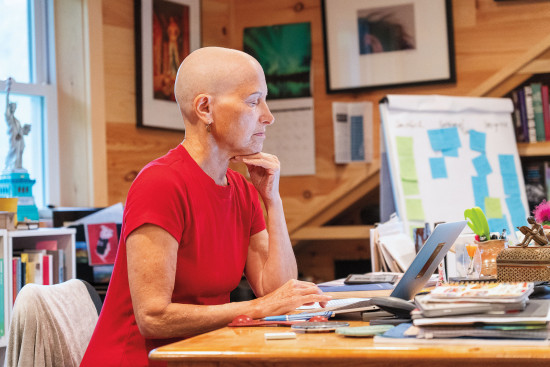
Emily RubinB. Docktor
A Second Cancer?!? No Way! Yes, Way!
Ten years ago, when I reached the five-year mark with no evidence of disease, the worry of a recurrence receded, except when I would go for my six-month and, eventually, yearly scans. With the new diagnosis, along with the distress of “the tumor is malignant,” I wondered if I had done something to bring this on. At 68, I strive to maintain a healthy lifestyle that includes regular exercise and a balanced diet. Emotionally, I was a careening roller coaster, looping around turns of disappointment, fear and frustration at the prospect of going through cancer treatment again. Surrendering time to cancer is nothing anyone plans for, and I tried to mitigate my angst by reminding myself, You have been through this before.
When I finished treatment the first time—after almost two years, including the monthly follow-ups—being given the all clear by the doctors was like being spun around in a pin-the-tail-on-the-donkey game and pushed out into the world to blindly find my way back to my life. Trying to look positively at the experience, I managed to see the end of this cancer journey as an untethered life-size reset button. I was free and looked at my time on this mortal coil and thought, It’s time to focus on writing and teaching. I knew it would not happen overnight, but the desire to fine-tune and amend my priorities was established.
This year, faced with a second time around, I hoped not to let cancer derail my professional and creative life as it had the first time. I challenged myself by deciding to keep running my Write Treatment Workshops for people affected by cancer for Mount Sinai’s cancer centers and the New York Oncology Hematology (NYOH) centers in upstate New York. I wanted to maintain my daily writing practice, which during the previous cancer had been reduced to fragments in a journal with a photo on the cover of an NYC blue and white coffee cup crushed on cement. The first time, inspired by a very sensible friend who also had cancer, I kept the journal and organized all my medical records and receipts in a binder that grew to six or seven inches thick over the two years. I still have the binder and laugh at the photo that I placed on the cover of a happy-go-lucky child wearing a red bandanna and holding a puppy.
Founding the Write Treatment Workshops in 2011 coincided with the publication of my debut novel, Stalina. This fulfilled my dream of publishing—and my desire to give back to the community that helped cure my cancer. Encouraging others to write while they processed life during times of illness motivated me to write and to become a better writer. Another writerly dream came my way when I was offered a fellowship for an MFA in creative writing.
When I was re-diagnosed, I was working on a third novel started a couple of years earlier. I was still running my Write Treatment Workshops. The workshops and some freelance writing were my sole sources of income. For years, I worked as a freelance television stage manager, which afforded me time to write, but with the industry changing, there was less work. For the most part, I am writing, teaching and submitting work for publication. But now, the reset button is flashing again, this time in force while I go through treatment.
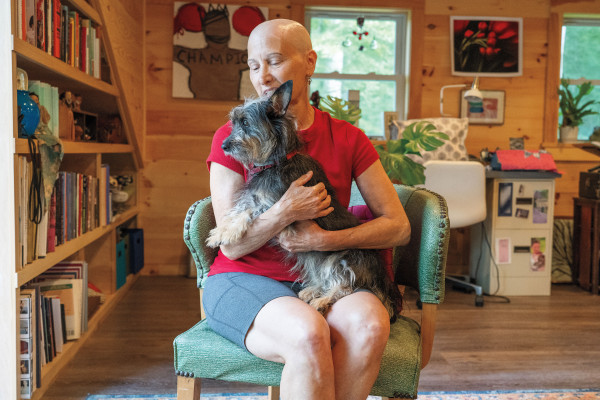
Emily RubinB. Docktor
A Treatment Plan and Support Network
Earlier this year, when I was on the phone with the doctor and she told me the bad news, I tried to remain calm, but I was humbled and even slightly embarrassed that I thought a recurrence or a second cancer was not going to happen.
The doctor tried to reassure me. “You took control—you’ve got this,” she said.
To add another life event into the mix, my mother passed away at age 103 just three weeks before my new diagnosis. She was remarkable and lived a very productive life and is greatly missed. Mourning the loss during the dizzying scheduling of consults, tests and scans was only a partial distraction. I missed talking to her every night by phone or in person. She was a role model for many and a big supporter of my writing. No time to wallow in a pity party, though; instead, I donned the proverbial boxing gloves and stepped once again into the cancer ring. I named this new tumor Lefty 2, the successor to the previous tumor, which I called Lefty. My doctors, nurses and hospital staff, along with my stalwart husband and friends, many of whom had been through this with me the first time, were there for me again. Added to this support was our rescue pup from Puerto Rico, Lucinda—13 pounds of terrier mutt who since day 1 of this diagnosis has been constantly by my side, providing unconditional love, devotion and delight.
I live in New York’s Hudson Valley and have been receiving chemotherapy at the NYOH facility in Hudson. Because of a small-world coincidence, my previous surgeon from 15 years ago is now practicing in Poughkeepsie, having established a comprehensive breast cancer center at Northwell Health/Nuvance Health.
“So good to see you,” Dr. Boolbol, the surgeon, said when my husband and I went for the initial consult.
We all nodded and answered simultaneously with a laugh and the tired cliché, “Wish it were under better circumstances.”
I would be juggling between two hospital systems, but everyone involved assured me that they were 100% behind my choices, and the goal was to cure my body of cancer. My oncologist, Dr. Maria Theodoulou at NYOH in Hudson, knew Dr. Boolbol professionally, which was a big help as we made a plan for treatment.
I felt like I scored a win-win, but my head was still spinning from poring over calendars and multiple locations for tests, scans and consultations. My therapist reminded me to be careful driving and crossing intersections. The anxiety of waiting for test results is real, an unnerving distraction.
The new round of tests, which would determine my course of treatment, brought good news. The PET/CT scan showed no sign of cancer anywhere else in my body, the MRI showed no lymph nodes were affected and the BRCA1 and 2 mutations were negative. The tumor, however, would require chemotherapy to make surgery easier and more efficiently remove the cancer.
I am blessed with a caring and respectful husband, who also makes me laugh at life’s absurdities. He has an outwardly calm, loving, wiseass sense of humor, but he also doesn’t hide his inner worry. We are facing this together, and it has brought us even closer (surprising to us both after 32 years of marriage). I shared my diagnosis with my writing workshop participants and my writing cohort, with whom I meet every day on a website for writers and lovers of literature, The24HourRoom.org. Writing and reading books together started as an antidote to the isolation of the COVID-19 pandemic, and, as I go through the isolation of treatment, the respite continues.
I have benefitted from improvements in treatment.
As a writing mentor to many dealing with cancer, I hoped my health would not bring them additional worry. The specter of mortality is very close in my workshops, as over the years we have lost writer friends. When I told them the news, there were some sticky moments, and I did see fear cross faces, which is understandable, but ultimately, the cancer community became a built-in support system. I was glad to have decided to keep the workshops going, and it became more evident than ever that each person’s processing of illness, whether their own or that of others, is solely theirs, but the collective can and does help allay fears.
My chemotherapy regimen began in mid-March and was scheduled through early September. From day 1, I was made aware of the many advances in treatment during the last 15 years. I hoped the clinical trials I participated in had helped—thank you, science! The first time around, immunotherapy was barely in force and genetic testing was still in its fledgling stages. I have already benefited from both improvements in treatment. The chemotherapy with some immunotherapy support was not as debilitating as it was before—a huge relief! Almost five months into treatment, chemotherapy was stopped earlier than expected because the tumor had shrunk significantly. My doctors were thrilled, and, even though it was out of the box, we moved forward with surgery. In mid-July, I had a mastectomy of the left breast at Dyson Breast Center, part of the Vassar Brothers Nuvance Health facilities in Poughkeepsie.
A Small Gesture Makes a Difference
As I was processing all these developments, memories of surgery, chemo and radiation lingered. Amid some of these tough moments, I found comfort remembering an incident on a subway platform when I was going through chemo the first time:
It was the middle of a heat wave in August 2009. I had already had surgery—a lumpectomy with lymph nodes removed—and was exhausted and nauseous from chemotherapy. I felt dejected and unnerved in the dankness and claustrophobia of the crowded subway while lamenting the fact that my last round of chemo was a couple of months out. I was bald, sweaty and feeling sorry for myself while waiting for the F train, when out of the crowd, a man with a shaved head (maybe it doesn’t matter, but he was very fit and quite attractive, probably early 30s—I was 53 at the time) came up to me with a big smile and raised his fist for a bump, the whole time acknowledging my bald head. After a highly energized leap and contact of solidarity, he disappeared into the crowd. I stood taken aback but with a smile spreading across my tired face. His playfulness made me feel present, seen, strong and part of humanity, something bigger than my internal sorry self. The unexpected connection rejuvenated my excitement for the pulse of this audacious and resilient city, even in the oily humidity of the underground. I stood taller, my eyes cleared with a joyful release of tears as the train rattled into the station.
I tell this story and have turned it into a writing prompt: “Describe a small gesture that made a difference in your day.” For me, the moment was poignant, playful, secretive and subversive—a reminder of how connecting with others also brings us back to ourselves, to our goals and to life. Another reset.
The Cancer Connection
From the first time I was diagnosed and again now, having cancer has opened the door to friends who find themselves or a loved one with cancer to connect for support—which goes both ways—to talk, to get and give advice and referrals or simply to vent. Only a week into my new diagnosis, two women I know well—a manager of the local farmers market where I have been a vendor for 10 years and a former participant in my workshops—were in touch to say that they had been diagnosed with breast cancer at the same time. As first-timers, they were glad to have an experienced old-timer to talk to.
My husband, writing family, local friends and medical professionals have been overly generous in their support, sending food and loads of offbeat, thoughtful and amusing cards, texts and emails and giving rides to appointments. A special connection I made this time was with local cancer survivor and artist Pauline Decarmo. With the support of her gallery, LABspace, in Hillsdale, New York, I added her artwork to our art collection and now have a new friend and collaborator. (See sidebar.)
Finally, I would like to share that I wrote a portion of this essay during my chemo/immunotherapy infusions at NYOH. The highly professional, determined and empathetic nurses keep the room quiet like a study hall, and I have come to see these sessions as a curative time for my body as well as my creative and emotional interiority. I feel the energy from all that is going on (maybe that’s partly the steroids), and it helps to feel centered and productive. For those who have the option, I recommend getting a port for the infusions. For me, it leaves my two hands free to gesture while talking with my patient and nurse partners, and I can shift to use all 10 fingers at the keyboard when inspired. Together, our lives coalesce as we assess and reflect. In between listening to others’ life stories, I write about this second time around with cancer and my connection to this ever-growing community, trying to understand and cure cancer for every living thing.
SIDESTORY
Champion: Pauline Decarmo, artist and cancer survivor
Pauline Decarmo is a visual artist and breast cancer survivor. I met Pauline at LABspace gallery in Hillsdale, New York, during a solo show of her work in October 2024. The exhibition featured all paintings made after her treatment for breast cancer. She was suffering from lymphedema—swelling due to buildup of lymph fluid—in her dominant right arm and felt that she wouldn’t be able to meet the proposed deadline. After encouragement from gallery owners Julie Torres and Ellen Letcher, Decarmo began using her nondominant left hand and created a series of paintings. When I viewed them, I was struck by the rawness and energy. One painting, titled Champion, depicted the torso of a female boxer, arms raised, wearing red boxing gloves and a crown at a jaunty angle. On the left side of her chest was a mastectomy scar, and from shoulder to shoulder, the word champion was emblazoned like a tattoo.
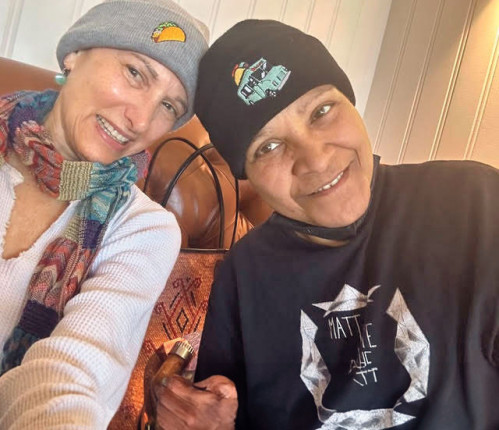
Emily Rubin and Pauline Decarmo
I related to the painting and had it in mind while brainstorming ways to raise funds for my Write Treatment Workshops. I thought it could be a perfect image for a campaign or even a logo for an event. I contacted the gallery to inquire about the painting. A week later, in January 2025, I was diagnosed with a second breast cancer.
The painting immediately took on a larger and familial meaning. I have rarely felt so physically connected to a work of art. I wanted to live with Decarmo’s Champion.
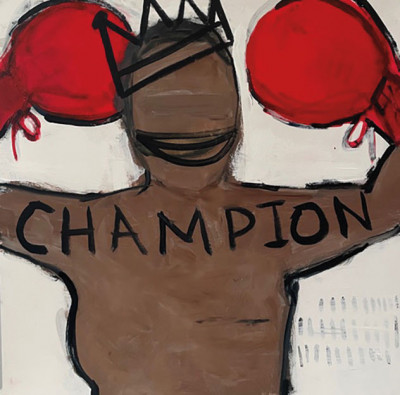
“Champion,” by Pauline Decarmo
Today, because of the generosity and support of Pauline and the gallery owners, the painting hangs in my writing studio, a reminder of the importance of art in our lives for joy, solace, inspiration and community.



Comments
Comments