

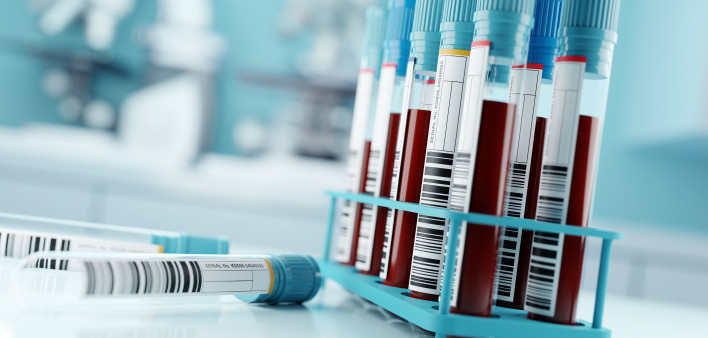
Health experts have long hoped for a simple blood test that could identify multiple cancers in their early stages, when they’re easier and cheaper to cure. Although several tests are on the market, so far the evidence in support of such tests, also known as liquid biopsies, has mostly been deemed insufficient.
Now come the findings of a randomized controlled trial in the United Kingdom of Galleri, a multi-cancer early detection (MCED) test. For the trial, the blood test was added to the standard of care screening at three annual visits. The goal was to see whether the addition of the blood test reduced the number of 12 prespecified cancers found at Stage III and Stage IV, compared with folks who received only the standard of care. The overall results? The Galleri test failed to lower the number of cancers found at those late stages. However, over time, the screening did reduce the number of cancers found at Stage IV, and the Galleri test did increase the detection of Stage I and II cancers. The research was presented at the American Society of Clinical Oncology Annual Meeting (ASCO 2026) that took place May 29 to June 2 in Chicago.
The study was led by Charles Swanton, MD, PhD, of the Francis Crick Institute and University College London Cancer Institute.
“The NHS-Galleri trial tested whether adding the Galleri blood test to NHS [National Health Service] screening could reduce the combined number of cancers diagnosed at Stage III or IV over three years,” noted Swanson in a press release from GRAIL, the healthcare company that manufactures the Galleri test. “The primary endpoint was not met. However, a prespecified secondary endpoint did show a greater than 20% reduction in Stage IV cancers, with the effect strengthening by the third year of screening. The Stage IV reduction is clinically meaningful because for many cancers there is a real gulf in outlook between a Stage IV diagnosis and one caught earlier. The hope is that for more patients the conversation can be about treating cancer with curative intent rather than managing it palliatively.”
“While the Galleri-NHS study results show some encouraging trends toward tumor downstaging, it is important to recognize that the trial did not statistically reduce late-stage cancers by its predefined primary endpoint,” added Julie R. Gralow, MD, ASCO chief medical officer and executive vice president in an ASCO press release. “Nevertheless, these findings still offer genuine hope for deadly malignancies that currently lack screening options, such as ovarian and pancreatic cancer. Longer-term follow-up and the eagerly awaited results of the US REACH trial will provide the critical additional information we need to fully evaluate the population-level benefits versus the risks of MCEDs.”
In a MedPage article on the trial, Gralow added: “ASCO’s guideline on liquid biopsies in cancer has been recently updated and will be published soon. It will continue to support the use of liquid biopsies in the monitoring and the defining of cancers that have already been diagnosed, but it will not yet recommend them for early cancer detection.”
The Galleri test can detect more than 50 types of cancer, including various deadly cancers that lack screening options, like pancreatic, ovarian and liver/bile duct cancers, but it does not replace recommended cancer screenings, such as mammograms, Pap smears or PSA (prostate-specific antigen) tests.
Cancers growing in the body shed DNA fragments known as cell-free DNA (cfDNA) in the blood stream. The Galleri test detects cfDNA to predict where in the body a cancer signal is located.
“Galleri represents a potential transformational shift in cancer detection, moving us to a more comprehensive proactive approach. As treatment options continue to advance, screening frameworks must evolve in parallel. Multi-cancer early detection provides an opportunity to reshape screening around an evolving goal: detecting more cancers when there is an opportunity for cure,” said Sir Harpal Kumar, GRAIL’s chief scientific officer and president of global clinical and medical affairs, in a press release.
The United Kingdom’s NHS-Galleri trial followed 142,942 people ages 50 to 77 who did not have cancer symptoms. All participants had their blood drawn annually; half the samples were tested using the Galleri test. People who either developed symptoms related to cancer or received positive results according to the test subsequently followed up with a doctor.
Overall, the Galleri screening reduced the number of cancers found at Stage IV by 14%. On the other hand, it found 19% more cancers at Stages I, II and III. The Galleri test also reduced the number of cancers found in clinical or emergency settings. Across all cancer types, 21% fewer were found clinically (not through screening), and 25% fewer were found in the emergency room.
“This is the first randomized controlled trial of a multi-cancer early detection test to report results, and it represents a landmark achievement for participants and the UK’s National Health Service. The trial demonstrates that annual multi-cancer early detection testing is feasible at scale within a national health system and can increase the number of cancers detected through screening, including many for which no organized program currently exists,” said Swanton.
he NHS-Galleri test trial will continue following up with participants to see whether the reduction in Stage IV diagnoses improves over time and whether Galleri testing can extend lifespan.
Click here for more news on cancer-detecting blood tests or liquid biopsies.
Click here for more reports from ASCO 2026.



Comments
Comments