

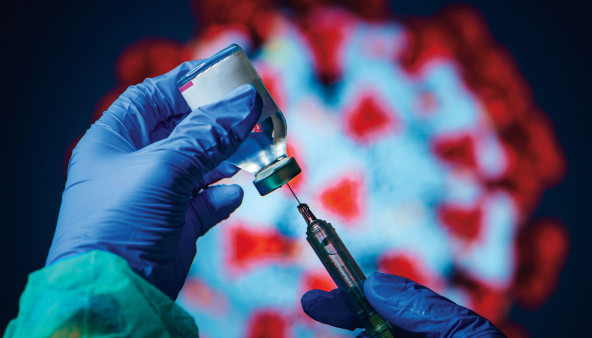
COVID-19 boosters reduced the risk of severe disease for people with cancer, according to research published in JAMA Oncology. While additional vaccine doses decreased the likelihood of hospitalization and intensive care admission, booster uptake among cancer patients remains low.
The study showed that an additional dose of the original monovalent vaccine beyond the initial series reduced the risk of hospitalization by 29%, and the bivalent booster released in Fall 2022, which protected against two SARS-CoV-2 variants, was similarly effective.
The Centers for Disease Control and Prevention under noted vaccine skeptic Robert F. Kennedy Jr. no longer calls for COVID booster shots for healthy adults under age 65, but the shots are still recommended for those at increased risk for severe illness, including people with cancer.
“Cancer patients are a vulnerable population,” senior study author Jane Figueiredo, PhD, of Cedars-Sinai, said in a news release. “Their immune systems can be weakened by their disease and the treatments they receive, which is why major health organizations recommend that these patients be vaccinated against COVID-19. Our study supports these recommendations.”
Figueiredo’s team analyzed retrospective data from more than 161,000 cancer patients treated with chemotherapy or immunotherapy during 2022 and 2023 at Cedars-Sinai, Kaiser Permanente Northern California, Northwell Health and the Veterans Health Administration. They looked at patients who received an additional dose of the original monovalent COVID vaccine by January 1, 2022, with follow-up through August 31, 2022, as well as those who got a bivalent booster from September 1, 2022, through August 31, 2023. (Subsequent boosters have also been monovalent, targeting the predominant circulating SARS-CoV-2 variant.)
Among 72,831 cancer patients included during the first period, 69% received an additional monovalent shot by January 1, 2022. Those who received the monovalent booster had a 29.2% lower risk of hospitalization and a 35.6% lower likelihood of intensive care unit admission. Vaccine effectiveness was similar for people with blood cancers and solid tumors. Protection against a COVID-19 diagnosis was lower, at 8.5%.
Among 88,417 people included during the second period, just 38% received the bivalent booster. The vaccine effectiveness against hospitalization was about the same, at 29.9%, while the effectiveness against intensive care admission was a bit lower, at 30.1%.
Although cancer patients and other immunocompromised people do not respond as well to COVID vaccines compared with the population at large, the number who needed to be vaccinated to prevent one hospitalization was lower: 166 for the original monovalent booster and 451 for the bivalent booster.
“The reduction in hospitalizations was significant, and the number of patients we needed to treat to see a benefit to the boosters is quite low,” Figueiredo said. “This shows a great benefit to our cancer patients and should encourage patients to discuss vaccination with their healthcare providers.”
A second analysis published in the same issue looked at risk factors for severe COVID-19 among people treated for cancer. Drawing on data from the National Cancer Institute’s COVID-19 in Cancer Patients Study, Brian Rini, MD, of Vanderbilt-Ingram Cancer Center, and colleagues identified 1,572 adults who tested positive for SARS-CoV-2 within the past two weeks and were either undergoing active cancer treatment or had previously received a stem cell transplant or CAR-T therapy. About two thirds had solid tumors, with breast cancer (24%) and lung cancer (14%) being most common. Enrollment took place between May 2020 and February 2022, and a majority (64%) had not been vaccinated. Nearly one in five (18%) were hospitalized for COVID within three months of enrollment, and 23% of these were admitted to the intensive care unit.
The COVID-19 death rate was 3% overall, which remained stable over time. COVID mortality was highest for patients with lymphoma, intermediate for those with acute leukemia and lung cancer and lowest for those with other blood cancers or solid tumors. People who received chemotherapy and those with certain prior health conditions (stroke, atrial fibrillation, pulmonary embolism) were more likely to be hospitalized, while those who were vaccinated prior to SARS-CoV-2 infection had about a 50% lower risk. Over the two years of follow-up, cancer treatment was disrupted 1,739 times, with about half of these attributed to COVID.
These findings suggest that, “despite a potentially suboptimal response, vaccination is still an important preventive strategy in this population,” Rini and colleagues wrote.
It is unclear whether the low booster uptake seen in Figueiredo’s study—especially for the bivalent booster—was due to patient concerns about safety or provider uncertainty about whether to administer a vaccine during cancer treatment. “What is clear is that we need to advocate strongly for vulnerable groups, including cancer patients, to receive these vaccines,” she said.
Successful interventions to increase vaccine uptake among people with cancer include implementation of structured vaccination protocols in oncology clinics, electronic reminders, standing orders and administration of vaccines by nursing staff during cancer care visits, the study authors suggested.
Click here for more news about COVID-19 and cancer.



Comments
Comments