

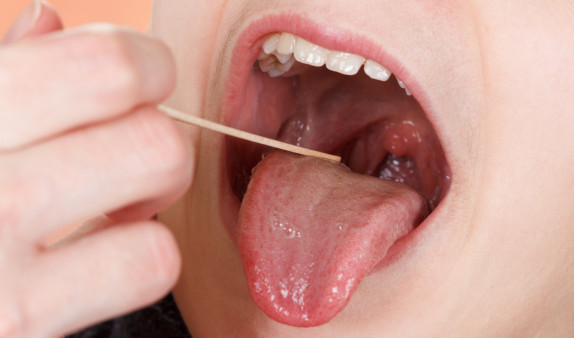
Oropharyngeal cancer, affecting the back of the mouth and the throat, has increased in the general population and among people living with HIV in recent decades. A study presented at the Conference on Retroviruses and Opportunistic Infections (CROI 2026) this week in Denver shed new light on risk factors for this malignancy and what groups are most affected.
Antonio Bandala-Jacques, an epidemiologist at the Johns Hopkins Bloomberg School of Public Health, and colleagues analyzed the incidence of oropharyngeal squamous cell carcinoma among HIV-positive people and its associated risk factors.
As background, Bandala-Jacques and coauthors recently published a meta-analysis of oropharyngeal cancer risk in the United States. It found that oral cancer incidence (new cases) has risen in the general population over the past 25 years, with HIV-positive men having the highest incidence rate. In fact, the incidence of oral cancer among men is now higher than the incidence of cervical cancer among women.
The new analysis presented at CROI used data from NA-ACCORD (the North American AIDS Cohort Collaboration on Research and Design), which is made up of more than 20 cohorts and over 200 sites in North America that together include more that 190,000 adults living with HIV. For this study, the researchers looked at data from cohorts that provided validated cancer data. The analysis included 135,359 people with a total of approximately 850,000 person-years of follow-up from 2000 through 2021.
In this population, 254 people were newly diagnosed with oropharyngeal cancer during the study period, with more diagnoses in recent years. The number of cases rose from 14 per year during 2000-2002 to 55 during 215-2017, then fell to 49 during 2018-2020. The incidence rate was 13 cases per 100,000 person-years (PY) during 2000-2002, more than doubled to 28 per 100,000 PY during 2006-2008 and more than tripled to 40 per 100,000 PY during 2018-2020, Bandala-Jacques reported.
Participants with oropharyngeal cancer were older than those without cancer (median 58 versus 50 years). People ages 50 to 59 had the highest incidence rate, at 49 cases per 100,000 PY, falling to 41 and 40 per 100,000 PY, respectively, for those ages 60 to 60 and older than 70. The incidence rate was much lower for those ages 40 to 49 (19 per 100,000 PY) and “negligible” (3 per 100,000 PY) for those under 40. However, while incidence rates were higher for older people, they rose in all age groups over time, suggesting that the increase was not simply due to aging of the population, Bandala-Jacques noted.
People diagnosed with oral cancer were more likely than those without cancer to be male (95% versus 86%). The incidence rate for men was about three times higher compared with women (31 versus 11 cases per 100,000 PY), consistent with the pattern seen in the HIV-negative population.
Looking at population subgroups, those diagnosed with oral cancer were less likely to be men who have sex with men (31% versus 40%) or heterosexual women (3% versus 8%) but more likely to be heterosexual men (11% versus 7%). Incidence rates for these groups were 26, 11 and 48 cases per 100,000 PY, respectively. The higher incidence of oral cancer among heterosexual men compared with gay and bisexual men may be due to differences in sexual behavior, the researchers suggested.
Oropharyngeal cancer is often caused by human papillomavirus (HPV), the most common sexually transmitted infection in the United States. The virus also causes cervical and anal cancer, which are more common among people living with HIV, especially those with advanced immune suppression.
HPV infection can be prevented with a vaccine, which is most effective if given before people become sexually active. The first HPV vaccine was approved in 2006 and was initially recommended for girls and young women ages 9 to 26; the recommendation was extended to boys and young men in 2011.
This study did not report HPV status because that information was missing in medical records, nor did it report whether participants had been vaccinated. However, given the age of the participants, a majority were likely ineligible for vaccination when the recommendation was adopted.
Turning to HIV-related variables, people diagnosed with oropharyngeal cancer had a lower nadir, or lowest-ever, CD4 T-cell count than those without the malignancy (160 versus 253), but the two groups were about equally likely to have viral suppression. The incidence rate was 36 per 100,000 PY for people with a nadir CD4 count below 200—indicating an AIDS diagnosis—24 per 100,000 for those with a lowest-ever CD4 count in the 200-499 range and 15 per 100,000 PY for those who never fell below 500.
People with oral cancer were also more likely than those without cancer to have ever smoked (82% versus 73%) and more often had a history of heavy drinking (41% versus 22%). The incidence rate for smokers was 36 per 100,000 PY compared with 22 per 100,000 PY for never smokers. Similarly, incidence rates for people with and without heavy alcohol use were 42 and 24 per 100,000 PY, respectively. People who inject drugs also had a higher incidence rate (44 per 100,000 PY).
“Rates of oropharyngeal cancer in people living with HIV have tripled since 2000,” the researchers concluded. “Oropharyngeal cancer is no longer a rare cancer in certain people living with HIV.”
Bandala-Jacques said that higher oral cancer rates among people with HIV may be attributable to the fact that HPV is more persistent in this group. He also suggested that the higher rate among heterosexual compared with gay men may be explained by HPV being more easily transmitted from women than from men during oral sex.
Future studies are needed to see whether oral cancer incidence will start to decline as later age cohorts with higher HPV vaccination rates reach the ages at which this cancer typically occurs.
Click here for more news about HIV and cancer.
Click here for more news from CROI 2026.




Comments
Comments