

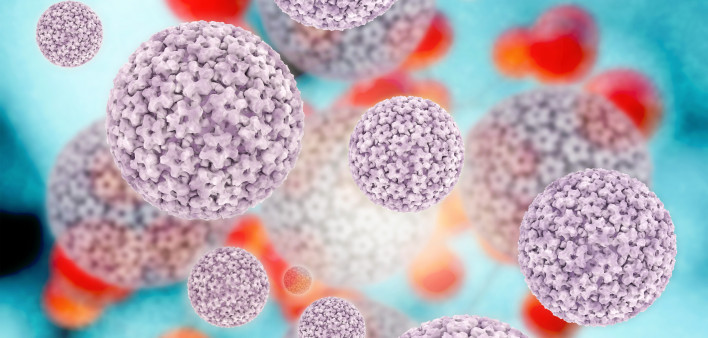
People with immune suppression, specifically those who are living with HIV or have received organ transplants, are more likely to develop cancers caused by human papillomavirus (HPV), according to a Swedish study published in JAMA Network Open. These results underscore the importance of prompt antiretroviral treatment and maintaining an undetectable viral load, as well as HPV vaccination for eligible people.
“These findings suggest that immunosuppression elevates HPV-related cancer odds, highlighting the need for targeted vaccination, screening and optimized clinical management in these populations,” the study authors wrote.
HPV—the most common sexually transmitted infection in the United States and worldwide—causes abnormal cell changes that can lead to several types of cancer, including anal, cervical, genital and oropharyngeal (mouth and throat, sometimes classified as head and neck) cancers. Studies have shown that people with HIV are more likely to acquire HPV, tend to carry more types of HPV, are less likely to naturally clear the virus and are more likely to progress from precancerous cell changes to invasive cancer.
In the United States, about one in five people newly diagnosed with HIV in 2024 already had AIDS, indicated by a CD4 count below 200. Even among those on antiretroviral therapy, a lower CD4 count impairs HPV clearance and increases the risk of disease progression. Transplant recipients who take immune-suppressing drugs to prevent organ rejection are also at higher risk.
Eva Meglic, MSc, of the Karolinska Institute in Stockholm, and colleagues conducted a retrospective case-control study that included 32,093 people with HPV-related cancers who lived in Sweden from 1983 to 2024. They were matched by age, sex and region of birth with 320,930 people without these cancers. The participants were born between 1940 and 2000; Sweden started HPV vaccination in 2007, so a majority would not have been eligible.
Among those with HPV-related cancers, two thirds were women, and 39% were younger than age 50; 96 (0.3%) were HIV positive, and 143 (0.4%) were solid organ transplant recipients. Among those without these cancers, 180 (0.1%) were people with HIV, and 610 (0.2%) were transplant recipients. Cervical cancer was most common at 13, 471 cases (42%), followed by head and neck cancer at 11,363 cases (35%), anal cancer at 2,970 cases (9%), vulvar cancer at 2,223 cases (7%), penile cancer at 1,647 cases (5%) and vaginal cancer at 419 cases (about 1%).
Both people living with HIV and organ transplant recipients were at elevated risk for HPV-related cancers. Overall, HIV-positive people were 4.5 times more likely to develop these cancers, while the risk more than doubled for transplant recipients. People with HIV were 59 times more likely to have anal cancer, about eight times more likely to have penile or vulvar cancer and more than twice as likely to have cervical cancer.
Transplant recipients were seven times more likely to develop vulvar cancer, six times more likely to have penile cancer, nearly three times more likely to have anal cancer and almost twice as likely to have cervical cancer.
Of note, the risk of head and neck cancer was not substantially elevated in either group. Recent studies have found that HPV-related oral cancer has been rising among both HIV-positive and HIV-negative people.
Among people with HIV, having a lower current CD4 count, a lower nadir (lowest-ever) CD4 count, a shorter duration of viral suppression and a higher peak viral load were associated with a higher risk of HPV-related cancer. People with a CD4 count below 200 were over eight times more likely to develop these cancers, but even those with a higher count had a fourfold greater risk. “Overall, incomplete immune reconstitution likely contributes to long-term cancer risk, supporting early antiretroviral therapy initiation and durable viral suppression,” the researchers wrote.
In the transplant group, higher odds of HPV-related cancer were observed for heart or lung recipients compared with kidney or liver transplant recipients. Cancer risk increased with more time since transplantation, “indicating a cumulative effect of long-term immunosuppression.” People who received transplants in the early years of the study were at higher risk, possibly due to the use of less intensive immunosuppressive regimens in more recent years.
Sociodemographic factors also played a role, which may reflect differences in health care engagement and access to prevention services. Among people with HIV, lower income and unmarried status were linked to elevated risk, though there was no clear income gradient for the transplant group. As a limitation, the study was unable to analyze behavioral factors such as sexual activity, smoking and alcohol use, which are known to raise the risk of HPV infection and related cancers.
“In this case-control study of immunosuppressed populations, HPV-related cancer odds were increased among both people with HIV and solid organ transplant recipients, with larger magnitudes of association observed in people with HIV,” the authors concluded. “These findings highlight the need for enhanced prevention, including HPV vaccination, screening and optimized immunosuppressive regimens.”
Routine cervical cancer screening, now combined with testing for high-risk HPV types, has dramatically lowered the risk of invasive cervical cancer since its adoption in the 1950s. Guidelines now recommend anal cancer screening for many people living with HIV—as well as for some HIV-negative men who have sex with men and transgender women and people who have received organ transplants—but it is not yet widely available.
The HPV vaccine is highly effective if given before people become sexually active, but later vaccination can still offer some protection. Population studies have shown a steep decline in cervical cancer in areas with high vaccination rates, and some countries are , of the malignancy in vaccinated age cohorts. Emerging evidence shows that the vaccine also reduces the risk of other HPV-related cancers in both women and men.
The Gardasil 9 vaccine protects against seven types of HPV that cause cancer and two that cause genital warts. The first HPV vaccine was approved in 2006 and was initially recommended for girls and young women ages 9 to 26; the recommendation was extended to boys and young men in 2011. The Food and Drug Administration has approved Gardasil 9 for people up to age 45. The Centers for Disease Control and Prevention advises that those ages 27 to 45 can talk with their doctor about whether they’re likely to benefit.
Click here for more news about HIV and cancer.



Comments
Comments