

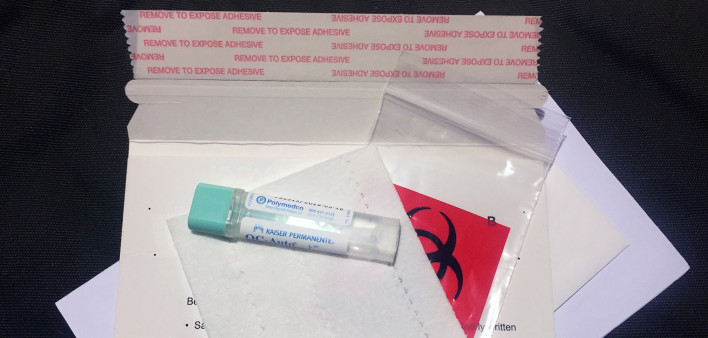
After Kaiser Permanente Northern California launched an initiative to offer flexible options for colorectal cancer screening, about twice as many people got screened, racial disparities diminished and mortality decreased, according to findings presented at Digestive Disease Week (DDW 2025).
“By offering an effective screening approach equally to everyone, we were able to eliminate much of the disparity,” lead researcher Douglas Corley, MD, PhD, said in a DDW news release. “Ten years ago, there were big gaps in cancer risk and death, especially among our Black patients. Now, those differences are nearly gone.”
In 2007, Kaiser started a systematic outreach program that sent fecal immunochemical test (FIT) kits to members ages 50 and older, along with reminders about the importance of screening to those who were not up to date. The free test involves collecting a stool sample at home and mailing it in for analysis. People with a positive test should receive a follow-up colonoscopy or sigmoidoscopy.
Kaiser Permanente researchers analyzed data from 1.1 million people ages 50 to 75 between 2000 to 2019. Although colon cancer is diagnosed most often among people over 50, incidence rose among younger people during this period, with higher rates for Black people. The U.S. Preventive Services Task Force now recommends screening starting at age 45, and the American Cancer Society advises earlier initiation for those at increased risk.
“Colorectal cancer remains the second leading cause of cancer death in the United States, with longstanding differences in who gets cancer and who dies from it,” Corley told reporters at a DDW media briefing.
The researchers found that screening rates (FIT, colonoscopy or sigmoidoscopy) more than doubled, from 37% in 2000 to 80% in 2019. What’s more, the increase was seen across racial and ethnic groups: 76% of Latinos, 77% of Black people, 82% of white people and 83% of Asians were up to date on screenings in 2019.
The colorectal cancer diagnosis rate initially rose due to early detection but later declined, with incidence dropping by about 30%. In addition, colorectal cancer deaths decreased by about 50%. The largest decline was seen among Black people, with mortality falling from 52.2 to 23.5 deaths per 100,000.
Flexibility is key to increased screening, according to Corley. “If you offer people more than one option for screening—such as colonoscopy or FIT—they’re more likely to get screened than if you offer either option by itself,” he said. “To get above an 80% screening rate, you almost always have to offer people multiple options.”
Click here for news about colon cancer.
Click here for more reports from DDW 2025.



Comments
Comments