

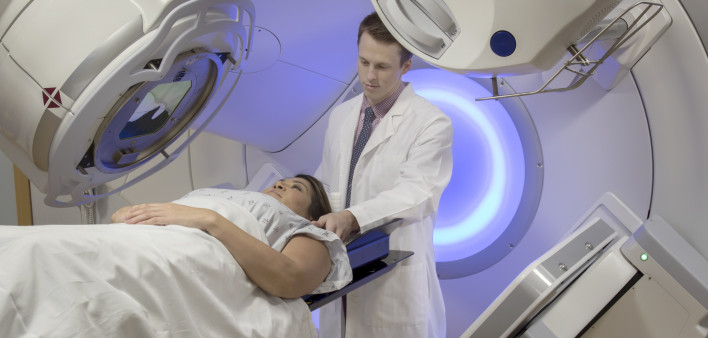
A new study investigates a less-explored side effect of high-dose radiation—that it may cause existing tumors in other parts of the body to grow, according to a University of Chicago Medicine (UChicago) news release.
Radiation therapy is a common cancer treatment that uses high-energy waves to shrink tumors. It works by damaging the DNA of cancer cells and stopping them from multiplying. Although it’s much more targeted than, say, chemotherapy, radiation may also harm healthy cells, causing side effects such as fatigue and skin problems.
Existing studies have shown that radiation can cause tumors that weren’t directly treated to shrink, a phenomenon known as the abscopal effect. Researchers at the UChicago Comprehensive Cancer Center have now labeled the opposite response, in which distant metastatic tumors grow after radiation, the “badscopal effect.”
Researchers say this response may occur because high-dose radiation increases production of the protein amphiregulin, by tumor cells directly treated with. High amounts of this protein weaken the immune system, which limits its ability to fight cancer.
Published in Nature, these findings may support new therapeutic strategies that could result in more effective treatments for metastatic cancer, or cancer that has spread to other parts of the body.
Radiation, or radiotherapy, is often used alone or in combination with other cancer treatments, such as chemotherapy or surgery. It can be administered externally via a beam or internally using radioactive beads (called brachytherapy) or liquid medications (radiopharmaceuticals).
To study tumor-to-tumor interaction, researchers analyzed biopsy samples from an existing clinical trial in which participants were treated with high-dose radiotherapy and immunotherapy. That clinical trial team found that tumors at preexisting metastatic sites increased in size following radiotherapy, suggesting that radiation may promote tumor growth.
Researchers then measured the gene activity of patient tumors before and after high-dose radiation to observe how radiation at the primary site affects tumors in other areas of the body. They found that tumors treated with radiation had significantly increased levels of gene encoding for the protein amphiregulin.
“These results open a whole new way of thinking about the systemic effects of radiotherapy,” said senior author Ralph Weichselbaum, MD, chair of radiation and cellular oncology at UChicago Medicine. “Based on these findings, we are planning to conduct a clinical trial to further explore and validate the results.”
To learn more about #Radiation and other treatment types, such as chemotherapy, surgery and hormone therapy, go to Cancer Health’s Basics on Cancer Treatment. It reads in part:
Cancer is not one but many diseases. How it is treated varies widely depending on cancer type and location, whether it has spread from its original site to other parts of the body (known as metastasis), genetic characteristics and patient preferences.
Cancer treatment has evolved rapidly in recent years. Today treatment can involve surgery, radiation and chemotherapy as well as new types of targeted therapy and immunotherapy that help the immune system fight cancer.
These newer types of treatment are an example of precision or personalized medicine, tailored to individual patients. Today’s targeted and immune-based therapies can be very effective, but they do not work for everyone, and it is not yet possible to tell in advance who will benefit.
Experimental therapies have traditionally been tested one drug at a time on one type of cancer at a time. But new therapies are increasingly being studied in combination regimens for first-line treatment rather than waiting for one drug to fail and then trying another. In addition, there is a growing trend toward treatments that work against cancer with specific genetic characteristics, regardless of where it is located in the body.


Comments
Comments