

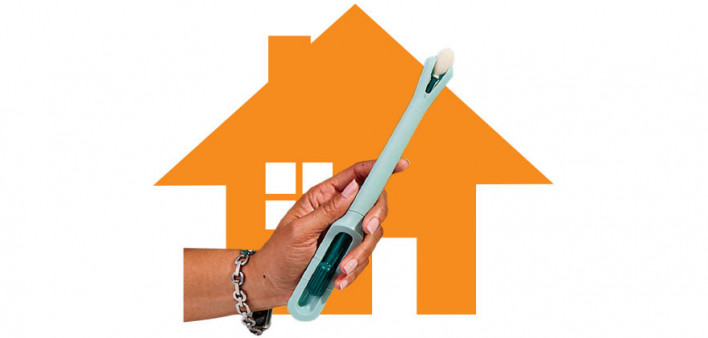
In a first, the federal health department recommends at-home self-collection HPV tests that screen for cervical cancer, offering an alternative to getting screened in a doctor’s office. The government’s support of the cancer screening device was published as part of the Health Resources and Services Administration’s (HRSA) updated Women’s Preventive Services guidelines. (HRSA is an agency within the Department of Health and Human Services.)
What’s more, health insurance plans will be required to cover the home testing kits by January 1, 2027, according to an article by the Center for Infectious Disease Research and Policy (CIDRAP). The guidelines also include new language that requires coverage of follow-up tests and checkup without additional cost sharing.
The new cervical screening guidelines are aimed at women ages 30 to 65 with an average risk for cervical cancer and were published in JAMA Network, a journal of the American Medical Association.
Doctors “are hopeful this new screening option will increase screening rates and save lives,” said Ann Sheehy, MD, senior author of the JAMA article, according to CIDRAP. Sheehy is also a chief medical officer and director of HRSA’s office of planning, analysis and evaluation.
Almost all cases of cervical cancer are caused by human papillomavirus (HPV). But when detected early, treatment is generally effective, and many people can be cured; when the disease is more advanced, it’s harder to treat. For more details, see the Basics on Cervical Cancer.
Cervical cancer rates have dropped thanks to effective HPV vaccines and early screening. Still, the American Cancer Society estimates that 13,490 women will be diagnosed with cervical cancer in 2026 and about 4,200 will die of the .
Last year, the Food and Drug Administration OK’d the Teal Wand—a kinder, gentler tool—for home use to self-collect samples for cervical cancer screening. The wand, which has a soft, spongelike tip to swab the vagina, tests for cancer-causing types of HPV. Patients ship their sample to a certified lab for testing. If the sample is positive, patients must follow up with a colposcopy—a test that allows doctors to get a detailed look at the cervix—to confirm the presence of abnormal tissue.
View this post on Instagram
Research has confirmed that at-home cervical cancer screening is as effective as an in-clinic screening, according to Christine Conageski, MD, MSc, an associate professor of obstetrics and gynecology at the Colorado University School of Medicine, who served as the principal investigator of the trial validating the wand.
“Studies have shown that half of new diagnoses of cervical cancer are those that were not screened in the preceding five years,” Conageski said in a press release. “That tells us that cervical cancer has really become a disease of access: access to the vaccine for prevention, access to cervical cancer screening and follow-up management of the first abnormal screen.”
In December, the American Cancer Society (ACS) released its own updated guidance for cervical cancer screening, published in a report in CA: A Cancer Journal for Clinicians, the organization’s flagship journal.
Robert Smith, PhD, senior vice president of early cancer detection science at the American Cancer Society, and senior author of the report, told CIDRAP the updates were facilitated by the FDA’s prior approval of at-home self-collection tools.
To learn more about at-home testing for HPV read “Home Test Kits Boost Screening for Cervical Cancer” and “New Research Validates At-Home Cervical Cancer Screening Device.”



Comments
Comments