

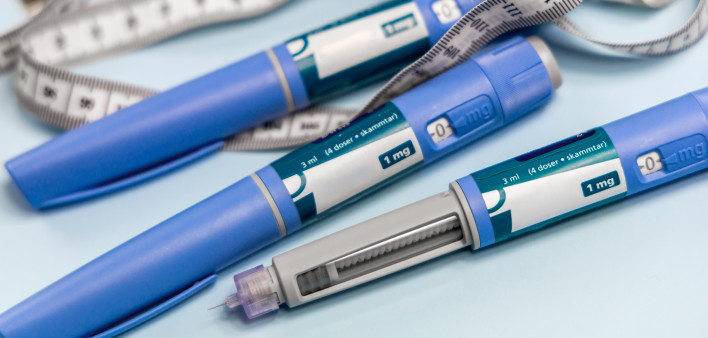
Popular GLP-1 weight-loss medications may contribute to lower mortality for people with colon cancer, according to study results published in Cancer Investigation. The researchers suggest that reduced inflammation and improved metabolism may help explain the link.
Overweight and obesity are associated with 13 different malignancies, including breast, colon, kidney, liver and pancreatic cancers. Recent studies have shown that GLP-1 (glucagon-like peptide-1) receptor agonists are associated with lower risk for developing obesity-related cancers. Emerging evidence suggest they may also improve outcomes for cancer patients and survivors.
GLP-1 agonists and related drugs mimic natural hormones that suppress appetite, regulate insulin and slow emptying of the stomach. They also have anti-inflammatory effects and perhaps additional activity that is not yet fully understood. The most widely used meds, semaglutide and tirzepatide, were initially approved for type 2 diabetes (brand names Ozempic and Mounjaro, respectively) and later received additional indications for weight management (brand names Wegovy and Zepbound).
Raphael Cuomo, PhD, MPH, of the University of California San Diego School of Medicine, and colleagues looked at the association between use of GLP-1 drugs and five-year mortality among patients with primary colon cancer (cancer that first arises in the colon), taking into account body mass index (BMI).
The study analyzed outcomes for 6,871 colon cancer patients using data from the University of California Health Data Warehouse. The researchers found that five-year mortality was 15.5% for people who used GLP-1 medications, compared with 37.1% for those who had not used the drugs—a 62% reduction in the risk of death.
The benefit persisted after adjusting for confounding factors such as age, disease severity and comorbidities. However, when considering weight, the reduction in mortality was only significant for people with substantial obesity, indicated by a BMI above 35. (A BMI of 25 is the threshold for overweight, 30 is the cutoff for obesity, 35 is Class II obesity and 40 is Class III or extreme obesity).
To explain the effect, the researchers suggested that the drug’s anti-inflammatory and metabolic effects, such as improved insulin sensitivity, may contribute to improved outcomes
Body fat, or adipose tissue, is metabolically active, pumping out hormones and inflammatory cytokines than could promote the development and progression of cancer. Prior research has shown that exercise, a healthy diet and bariatric surgery reduce cancer risk, so it’s not surprising weight-loss meds can help as well.
Beyond just reducing obesity, GLP-1 drugs appear to have more direct effects. Laboratory studies have shown that they inhibit proliferation of prostate, endometrial and ovarian cancer cells. One study found that tirzepatide slowed breast cancer growth in mice. A small study of people with obesity showed that semaglutide improved natural killer cell function even in people who didn’t lose much weight.
Cuomo and colleagues stressed the urgent need for clinical trials to test whether GLP-1 medications can enhance survival, particularly among people with obesity-related cancers.
Click here for more news about obesity and weight loss.




Comments
Comments