

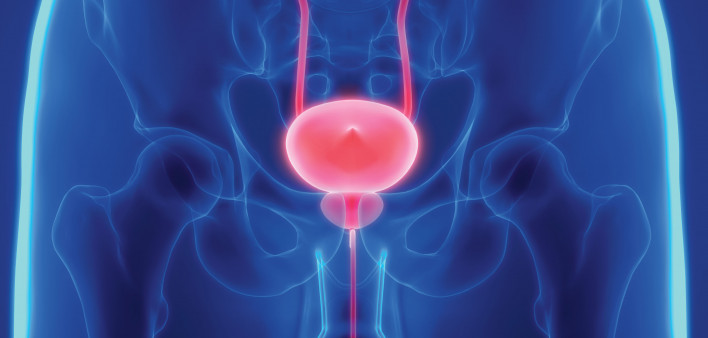
On June 12, the Food and Drug Administration (FDA) approved Zusduri, an intravesical solution of mitomycin, for people with a specific type of recurrent low-grade bladder cancer. In a Phase III clinical, 78% of treated patients had a complete response.
Low-grade intermediate-risk non-muscle-invasive bladder cancer (LG-IR-NMIBC) affects around 82,000 people in the United States each year, about 59,000 of whom experience recurrence. The standard treatment is a surgical procedure known as transurethral resection of bladder tumor (TURBT), which removes tumors and surrounding tissue. However, up to 70% of patients experience recurrence and require repeat operations.
"Zusduri marks a breakthrough in uro-oncology, offering a new alternative for recurrent LG-IR-NMIBC patients who can live for many years with the disease but often endure multiple resections, under general anesthesia,” study investigator Sandip Prasad, MD, of Morristown Medical Center/Atlantic Health System, said in a news release.
Zusduri, from UroGen, is a sustained release formulation of the chemotherapy drug mitomycin that is delivered directly into the bladder via a catheter in an outpatient procedure. It is the first medication approved specifically for recurrent LG-IR-NMIBC. A related mitomycin medication, UroGen’s Jelmyto, was approved in 2020 for people with low-grade upper tract urothelial cancer.
The approval of Zusduri is based on results from the Phase III ENVISION trial (NCT05243550), which enrolled 240 adults with LG-IR-NMIBC that relapsed after TURBT. They had multiple tumors, a solitary tumor larger than 3 centimeters or recurrence within one year. Zusduri was instilled into the bladder once weekly for six consecutive weeks. This was a single-arm trial with no placebo or comparison treatment group.
At three months, the complete response rate—meaning no detectable disease in the bladder according to cystoscopy and urine cytology—was 78%. The longest duration of response exceeded two years, and 79% of responders had no detectable cancer for at least a year.
The treatment was safe and generally well tolerated. The most common adverse reactions include decreased hemoglobin, lymphocytes and neutrophils, elevated liver enzymes, various other laboratory abnormalities, painful urination (dysuria), blood in the urine and urinary tract infections. In the trial, 12% of patients experienced serious adverse reactions, including urinary retention (0.8%) and urethral stenosis (0.4%).
The FDA generally does not grant full approval of cancer drugs based solely on response rates in a single-arm clinical trial. Typically, regulators want to see comparative data or clinical benefits such as improved survival. In this case, the agency went against a negative recommendation of an advisory committee, which in May voted 5 to 4 that the risks of Zusduri likely outweigh the benefits.
However, one of the committee members who voted in favor, Mark Ball, MD, of the National Cancer Institute, said the continued response at 12 months and beyond is “quite encouraging,” MedPage Today reported. Another member, Isla Garraway, MD, PhD, of UCLA Health, suggested that Zusduri is an important option for certain patients who are not good candidates for surgery. “Any time you can delay surgery or prevent surgery is a win for everyone,” she said.
Click here for prescribing information for Zusduri.
Click here for more news about bladder cancer.




Comments
Comments