

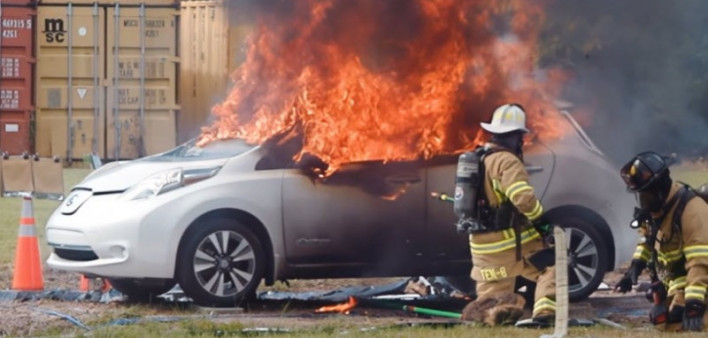
Electric vehicle (EV) fires expose firefighters and communities to carcinogens and heavy metals, according to research presented at the seventh annual International Fire Service Cancer (IFSC) Symposium hosted by Sylvester Comprehensive Cancer Center at the University of Miami Miller School of Medicine.
EVs have become increasingly popular in the United States over the last decade. In 2022, there were 2.4 million EVs registered in the country, according to Consumer Affairs. While EV fires are relatively uncommon, they are more difficult to extinguish and can release more than 100 chemicals, including heavy metals and carbon monoxide.
“While all fires pose exposure risks, EV fires elevate the risk to firefighters, owners and the nearby community because they are powered by massive batteries containing high concentrations of heavy metals,” said deputy director of Sylvester’s Firefighter Cancer Initiative (FCI) Alberto Caban-Martinez, PhD, DO, MPH, in a news release. “Many of these metals are associated with increased cancer risk due to their potential to cause DNA damage, oxidative stress and genetic alterations.”
To study the impact of such fires on health and the environment, FCI researchers staged an EV fire. They found that EV fires expose people to dangerous heavy metals.
The metals researchers found in EV batteries include:
- Arsenic, linked to lung, bladder, skin, liver and kidney cancer;
- Cadmium, linked to lung, prostate, kidney, pancreatic and breast cancer;
- Chromium, linked to lung, nasal and sinus cancer;
- Nickel, linked to lung, nasal and laryngeal cancer;
- Lead, linked to brain, kidney, stomach and lung cancer.
What’s more, researchers found that EV fires burn much hotter compared with regular car fires and require more water to extinguish. Indeed, an EV fire can require up to 30,000 gallons of water to put out, compared with the 750 gallons of water needed for a typical car fire.
“This project represents the future of fire science,” said Caban-Martinez. “Electric vehicles contain many potential toxins, including gases and metals. As EVs increase in number throughout the world, we need to have reliable information on the consequences of the release of these materials on firefighters, members of the community, the air, the soil and nearby water.”
Compared with the general population, firefighters are about twice as likely to develop certain cancers, according to the National Institute for Occupational Safety and Health.
Experts say pinpointing the exact cause of cancer among firefighters is difficult because they are exposed to many carcinogens, including asbestos and other dangerous chemicals found in soot and smoke from modern buildings containing synthetic materials.
Studies have shown that firefighters have an increased risk for colon, prostate and testicular cancer, mesothelioma, multiple myeloma, leukemia and more. From 2002 to 2019, 66% of line-of-duty deaths among firefighters were caused by cancer, according to the Firefighter Cancer Support Network.
This year marks the 10th anniversary of Sylvester’s FCI, which works closely with firefighters to develop and implement projects that promote positive changes in the fire service and raises awareness about the cancer risks firefighters face.
“Over the past 10 years, we have converted research into action, built partnerships that drive meaningful change and empowered the fire service with the knowledge and tools to reduce cancer risk,” said Caban-Martinez in the news release. “This milestone is not just a reflection of our progress. It is a call to the future.”
To read more, click #Cancer Risk. There, you’ll see headlines such as “Los Angeles Firefighters Face Increased Cancer Risk” “EPA Bans Two Common Chemicals That Cause Cancer” and “Reduce Your Cancer Risk Factors."




Comments
Comments