

Cancer patients who received the Moderna or Pfizer/BioNTech messenger RNA (mRNA) COVID-19 vaccine within 100 days of starting immune checkpoint inhibitors were twice as likely as unvaccinated people to live for three years after starting treatment, according to a study presented at the European Society for Medical Oncology Congress (ESMO 2025) and published in Nature. These findings suggest that mRNA vaccines may help boost the effectiveness of immunotherapy and could increase the number of patients who benefit from this type of treatment.
“This study demonstrates that commercially available mRNA COVID vaccines can train patients’ immune systems to eliminate cancer,” Adam Grippin, MD, PhD, of the University of Texas MD Anderson Cancer Center, said in a news release. “When combined with immune checkpoint inhibitors, these vaccines produce powerful antitumor immune responses that are associated with massive improvements in survival for patients with cancer…. We are hopeful that mRNA vaccines could not only improve outcomes for patients being treated with immunotherapies but also bring the benefits of these therapies to patients with treatment-resistant disease.”
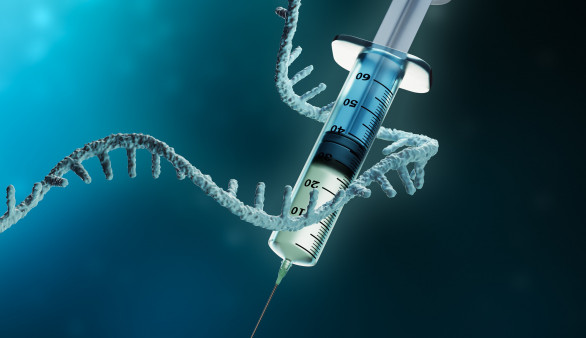
Messenger RNA (ribonucleic acid) is a piece of genetic code that tells cells how to make proteins. mRNA COVID vaccines contain synthetic molecules that encode blueprints for making the SARS-CoV-2 coronavirus spike protein, which triggers an immune response. A similar approach is used for therapeutic cancer vaccines, which deliver instructions for making tumor antigens. The aim is to teach the immune system to recognize and attack the virus or malignant cells.
Immune checkpoint inhibitors are monoclonal antibodies that unleash the activity of killer (CD8) T cells, a type of white blood cell that fights cancer. But in some cases, these immune cells are so exhausted that they can’t be spurred into action. The new research suggests that even mRNA vaccines that are not specifically designed to target cancer can still promote a stronger immune response.
Grippin’s team studied the links between mRNA SARS-CoV-2 vaccines, immune activation and outcomes among people with cancer.
In preclinical studies, the vaccines led to an increase in type I interferon, a cytokine that enables innate immune cells to prime the activity of cancer-fighting T cells. The researchers observed a similar rise in type I interferon in vaccinated healthy people and increased expression of the PD-L1 checkpoint protein on tumors in cancer patients, the target of many checkpoint inhibitors. These findings suggest that mRNA vaccines “work like an alarm, putting the body’s immune system on high alert to recognize and attack cancer cells,” according to the MD Anderson news release.
The team also retrospectively looked at the association between mRNA COVID vaccines and response to checkpoint inhibitors using medical records from more than 1,000 cancer patients. They found that those who were vaccinated within 100 days of starting immunotherapy had significantly improved median and three-year overall survival compared with those who remained unvaccinated.
One group included people with advanced non-small-cell lung cancer. The 180 patients who received an mRNA vaccine within 100 days of treatment had a median survival time of 37.3 months, compared with 20.6 months for the 704 patients who did not receive a vaccine. At three years, 56% and 31%, respectively, were still alive. Likewise, in a cohort of people with metastatic melanoma, the median survival time was 26.7 months for the 167 unvaccinated patients but was not yet reached for the 43 patients who received the vaccines because a majority were still alive. The three-year survival rates were 44% and 68%, respectively.
What’s more, the improvement was especially notable for individuals with so-called immunologically “cold” tumors that don’t respond as well to immunotherapy. Melanoma is generally considered “hot,” prostate cancer is an example of a “cold” tumor and lung cancer is variable. In this study, patients who had “cold” tumors with low PD-L1 expression showed a nearly five-fold improvement in three-year overall survival if they received an mRNA COVID vaccine.
In contrast, the researchers did not see the same survival advantage for cancer patients who received non-mRNA vaccines, such as a flu shot, around the time they started checkpoint immunotherapy.
“Together, these results demonstrate that clinically available mRNA vaccines targeting non-tumor-related antigens are potent immune modulators capable of sensitizing tumors to immune checkpoint inhibitors,” the study authors concluded.
The researchers are now designing a randomized Phase III trial to determine whether mRNA COVID vaccines should be part of the standard of care for people receiving immunotherapy for cancer.
“The implications are extraordinary—this could revolutionize the entire field of oncologic care,” co–senior author Elias Sayour, MD, PhD, of the University of Florida, said in another news release. “We could design an even better nonspecific vaccine to mobilize and reset the immune response, in a way that could essentially be a universal, off-the-shelf cancer vaccine for all cancer patients.”
Click here for more news about cancer treatment.
Click here for more reports from ESMO 2025.



Comments
Comments