

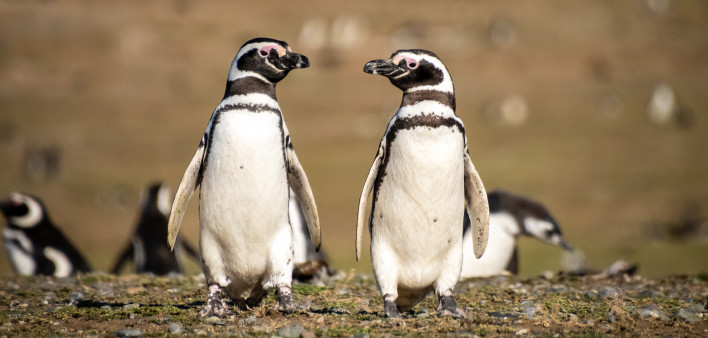
The San Francisco Zoo is treating a penguin with a melanoma vaccine designed for dogs, the San Francisco Chronicle recently reported. While it’s too soon to say whether it is helping Sophia, cancer vaccines are showing increasing promise for human patients.
The goal of a therapeutic cancer vaccine is to train the immune system to recognize and attack malignant cells. (These are distinct from preventive vaccines that protect against viruses that cause cancer, such as human papillomavirus and hepatitis B.) Personalized cancer vaccines are custom-made using antigens from an individual patient’s tumor, while off-the-shelf vaccines use shared cancer antigens, making them less expensive and more readily available.
Sophia, age 28, is the zoo’s oldest Magellanic penguin. Late last year, a CT scan revealed that she had aggressive melanoma. A large tumor near the base of her tail was removed, but veterinarians thought the side effects of follow-up treatment with radiation and chemotherapy would be too severe.
Instead, Sophia received an off-the-shelf melanoma vaccine called Oncocept that is approved for dogs. The DNA vaccine encodes instructions for human tyrosinase, a protein on melanocytes (melanin-producing cells) that is overexpressed on malignant cells. A dog’s immune system recognizes the human protein as foreign, but it is similar enough that the immune response also targets cancerous canine melanocytes. Studies have shown that vaccinated dogs can have significantly prolonged survival compared with untreated dogs. And this is not the first time this approach has been used for a penguin with melanoma.
A different type of canine cancer vaccine hit the headlines in March, when The Australian ran a story about a tech entrepreneur who used artificial intelligence to create a bespoke vaccine in the hope of curing his dog’s mast cell cancer.
To create a customized cancer vaccine, scientists genetically sequence DNA from a patient’s tumor, looking for mutated proteins called neoantigens. Machine learning algorithms are often used to select those most likely to provoke an immune response. The selected antigens may be injected directly (the approach used for Dana-Farber Cancer Institute’s NeoVax) or used to create mRNA blueprints that encode instructions for making the antigens in the body (the technology used for the Pfizer/BioNTech and Moderna COVID-19 vaccines).
Working with scientists at the University of New South Wales, Paul Conyngham had Rosie’s tumor DNA sequenced and used the results to develop a customized mRNA vaccine. The dog also received an immune checkpoint inhibitor, a type of immunotherapy that unleashes killer T-cells to fight malignant cells. So far, the vaccine appears to be working, as a large tumor on Rosie’s hind leg has shrunk in half. “I’m under no illusion that this is a cure, but I do believe this treatment has bought Rosie significantly more time and quality of life,” Conyngham said.
Customized mRNA vaccines are also yielding good results in studies of human patients. Cancer vaccines appear to work best for preventing recurrence by training the immune system to attack residual malignant cells that may remain after a tumor is surgically removed.
At the recent American Society of Clinical Oncology Annual Meeting, researchers reported that people with advanced melanoma who received Moderna’s intismeran autogen vaccine (mRNA-4157) plus Merck’s checkpoint inhibitor Keytruda (pembrolizumab) after surgery saw a 49% reduction in disease recurrence or death at five years compared with those who got Keytruda alone. Larger Phase III trials are now ongoing for patients with high-risk advanced melanoma and non-small-cell lung cancer, while Phase II studies are underway for other malignancies, including kidney cancer, bladder cancer and cutaneous squamous cell carcinoma.
Further back in the pipeline, researchers are testing a customized mRNA vaccine from BioNTech and Genentech, dubbed autogene cevumeran (BNT122), for pancreatic cancer. Half of the 16 patients in a small Phase I trial who received the vaccine plus the checkpoint inhibitor Tecentriq (atezolizumab) and chemotherapy after surgery had strong T-cell responses against the neoantigens in the vaccine. In 2024, the team reported that six of these responders remained cancer-free for at least three years, while most of the eight nonresponders relapsed. At this year’s American Association for Cancer Research Annual Meeting, they reported that seven of the eight responders were still alive four to six years after surgery—much higher than the average survival rate for this deadly cancer.
Researchers have also reported promising results from studies of personalized vaccines for kidney cancer and glioblastoma brain cancer (in both humans and dogs).
As for Sophia the penguin, the SF Chronicle reports that she had her first post-vaccine checkup last week, so it is not yet possible to tell if the vaccine is working. But she has shown no side effects and is doing well, continuing to raise orphan chicks with her long-time mate.
Click here for more news about cancer vaccines.



Comments
Comments