

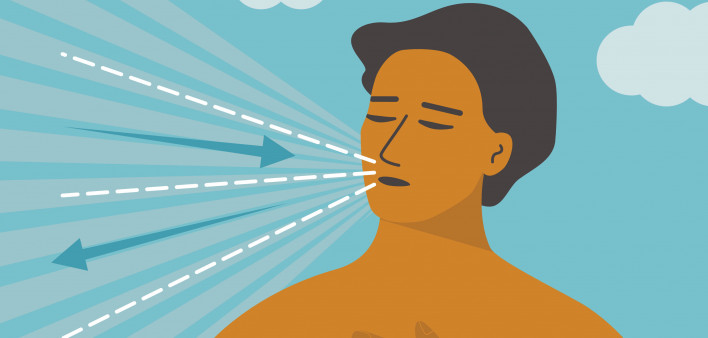
The average person takes almost 22,000 breaths each day, but most of us don’t breathe properly. This can become a serious issue for people living with cancer and other chronic conditions who have difficulty breathing. The medical name for this scary experience is dyspnea. Its causes vary and include the effects of cancer and certain treatments, fatigue, anxiety and other health issues, so it’s important to check with your health care team if you struggle with dyspnea.
Fortunately, in many cases, basic breathing exercises can help. They can reduce stress, shift your focus away from pain, boost lung capacity and improve overall wellness. The four techniques below are often recommended for breathing easier and more efficiently. They can be performed throughout the day and require no special equipment. Give them a try, and soon you’ll say bye-bye to breathlessness.
Diaphragmatic breathing. The diaphragm is a dome-shaped muscle located just below the lungs and heart and above the abdominal cavity. It contracts and flattens when you inhale and relaxes when you exhale. Using your diaphragm to breathe requires less energy and helps engage your whole lungs, which increases oxygen in your blood and lowers blood pressure and heart rate. Here’s how to practice the technique. While lying on a flat surface or sitting in a supportive chair, place one hand on your belly, just under your rib cage, and the other on your chest. Inhale through your nose and note how your breathing moves your hands. If properly done, the hand on your chest (the upper hand) should remain stationary, while the hand on your tummy will rise and then fall when you exhale. Slowly breathe out through pursed lips, while gently pulling your abdomen toward your spine. Repeat several times.
Pursed lips breathing. One of the simplest ways to control shortness of breath, this technique slows your breathing rate and helps open up your airways, allowing more oxygen to enter the lungs. You can do it while relaxed, like while watching TV, or when stressed or moving around. Here’s how: Breathe in slowly and deeply through your nose like you’re smelling a rose and exhale slowly and gently through pursed lips, as if you’re blowing out a candle.
Scapular squeezes. Sit in a chair or lean back in bed with your back supported. Relax your arms at your sides, and turn your palms face up. While inhaling through your nose, squeeze your shoulder blades, or scapulae, back and down so your chest puffs out. Relax as you exhale through pursed lips. This technique expands your chest wall and moves your ribs so you can take deeper breaths. Bonus: These short exercises can reduce tension and improve posture!
4-7-8 breathing. Try this in a relaxed position, even lying in bed. Inhale through your nose for 4 counts, hold your breath for 7 counts, then exhale through pursed lips for a count of 8. Relax for a few seconds, then repeat. This technique has a tranquilizing effect and can be used to reduce anxiety, manage cravings and help you fall asleep.



Comments
Comments