

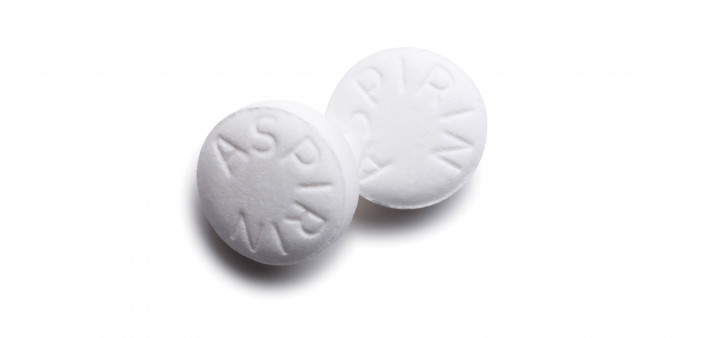
Two recent studies add to the mixed evidence about the link between daily aspirin use and colorectal cancer (CRC), suggesting it may reduce the risk of recurrence and improve survival.
The ALASCAA trial, presented at the ASCO Gastrointestinal Cancers Symposium, assessed whether low-dose aspirin affects recurrence or CDC with PI3K genetic mutations. The Scandinavian study included 419 people with Stage II or III colon cancer and 207 with Stage I, II or III rectal cancer. They were randomly assigned to receive 160 milligrams of aspirin once daily or a placebo starting within three months after surgery and continuing for three years. Patients who took daily aspirin had a 55% lower risk of cancer recurrence and about a 45% improvement in disease-free survival.
“Aspirin checks all of the boxes: It’s effective, it’s low risk, it’s inexpensive and it’s easy to administer,” Pamela Kunz, MD, of Yale School of Medicine, said at a conference media briefing.
In the second study, researchers evaluated aspirin for secondary prevention of CRC recurrence after treatment. The ASCOLT trial included 1,550 patients in 11 countries, mostly in Asia, with Stage II or III colon or rectal cancer. After undergoing surgery and at least three months of chemotherapy, they were randomized to receive 200 mg of aspirin daily or a placebo for three years.
After five years of follow-up, disease-free survival rates were 77% in the aspirin group and 75% in the placebo group. Five-year overall survival rates were 91% and 89%, respectively. Neither difference reached the threshold for statistical significance. Daily aspirin “was well tolerated but did not significantly improve disease-free survival,” John Chia, MBBS, of National Cancer Centre Singapore, and colleagues concluded. They added, however, that a more modest benefit “could not be excluded.”




Comments
Comments