

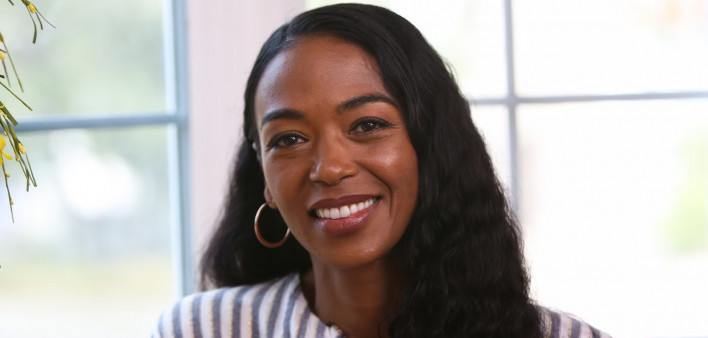
Ananda Lewis, the former MTV VJ known for hosting shows like “Total Request Live,” died at age 52, according to a statement from her family. She had been living with breast cancer since 2020.
“She’s free, and in His heavenly arms,” her sister Lakshmi wrote on Facebook. “Lord, rest her soul.”
View this post on Instagram
Lewis became one of MTV’s most popular hosts, interviewing celebrities including Destiny’s Child, Brandy, Britney Spears and *NSYNC. She left MTV in 2001 to host her own program, The Ananda Lewis Show.
In 2020, Lewis was diagnosed with Stage III breast cancer after conducting a self-exam. She urged others to schedule their mammograms and admitted that she had not undergone regular mammograms leading up to her diagnosis due to her fear of radiation, according to CNN.
“I need you to share this with the women in your life who may be as stubborn as I was about mammograms, and I need you to tell them that they have to do it,” Lewis said in her announcement. “Early detection, especially for breast cancer, changes your outcome. It can save their life.”
In October 2024, Lewis revealed during a CNN roundtable that she went against medical advice and did not have a double mastectomy following her diagnosis. Her tumor had metastasized, and her cancer had progressed to Stage IV.
“My plan at first was to get out excessive toxins in my body. I felt like my body is intelligent. I know that to be true,” Lewis said during the roundtable. “I decided to keep my tumor and try to work it out of my body a different way…. I wish I could go back. It’s important for me to admit where I went wrong with this.”
Breast cancer is the second most common cancer among women, after skin cancer. Nearly 317,000 women will be diagnosed with invasive breast cancer this year, according to the American Cancer Society.
Around a quarter of women with early breast cancer will go on to develop metastatic disease. About 15% of breast cancer patients have hard-to-treat triple-negative breast cancer, which is more common among young women and Black women, according to Cancer Health’s Basics.
In January, Lewis wrote an essay in Essence, emphasizing that “prevention is the real cure” for cancer and encouraged women to pay attention to their bodies.
“As Black women, we have all kinds of factors we’re not even aware of that contribute to cancer impinging upon us,” she wrote. “Increase your knowledge about how to prevent getting here in the first place.”
To read more, go to Cancer Health’s Basics on Breast Cancer. It reads in part:
What is breast cancer?
Cancer develops in breast tissue when cells grow out of control. Malignant cells can form a tumor that may be visible on mammograms or felt as a lump.
Breast cancer is easier to treat than many other cancers, and early detection and treatment improves outcomes. But if cancer is diagnosed after it has spread elsewhere is the body, it is harder to treat, and the likelihood of survival is lower.
How is breast cancer classified?
Breast cancer usually arises in ducts in the breast that produce milk. Other types start in the cells of the muscle, fat or connective tissue. Less common types include inflammatory breast cancer, Paget disease and angiosarcoma. Ductal carcinoma in situ (DCIS) means that the cancer has not yet spread. As it progresses, breast cancer can invade surrounding tissues and nearby lymph nodes. Metastatic, or Stage IV, breast cancer has spread elsewhere in the body, often affecting the liver, bones or brain.
Breast cancer is classified according to the types of receptors it expresses. Most breast tumors carry estrogen or progesterone receptors (hormone receptor positive) and can be treated with hormone therapy. Others express HER2 receptors and can be treated with HER2 inhibitors such as Herceptin (trastuzumab). Triple negative breast cancer (TNBC) does not express any of these receptors and is more difficult to treat.



Comments
Comments